Which Bra Is Right for You? Learn More


The bra that fit you at 40 is quietly working against you at 60. Not because you have changed shape overnight, but because breast tissue itself has changed composition, the skin above it has thinned, and the internal ligaments that used to do the lifting have loosened. Your bra did not fail. The body it was fitted for is no longer the body wearing it.
That shift is measurable. In a peer-reviewed study of 208 women aged 45 to 65, four out of five said they had noticed a significant change to their breasts with ageing, and just over half reported an increase in breast size since 45 [1]. Those are not small numbers, and they explain something most sports bra guides skip: support needs are not static, so the criteria you shop by should not be either.
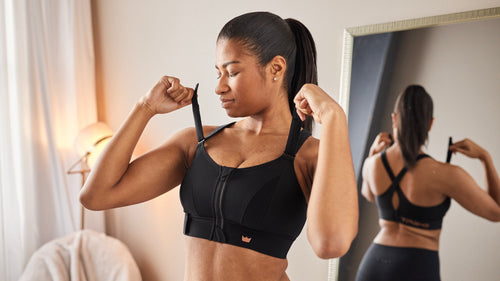
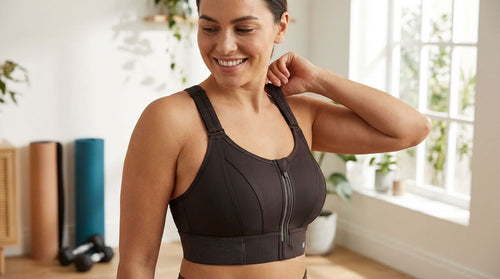
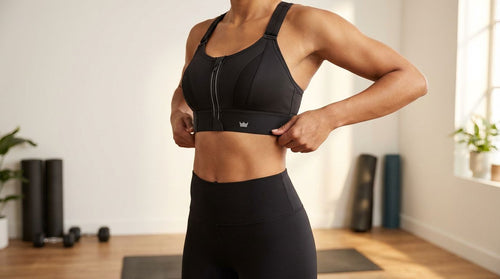
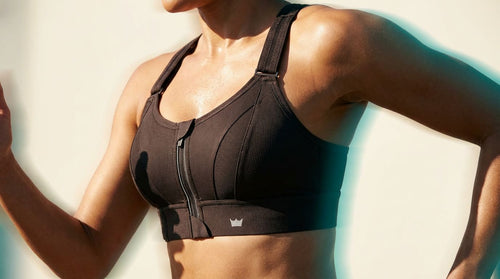
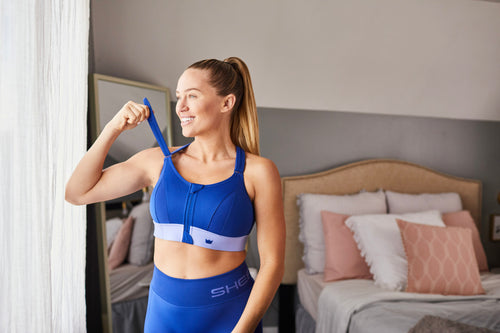
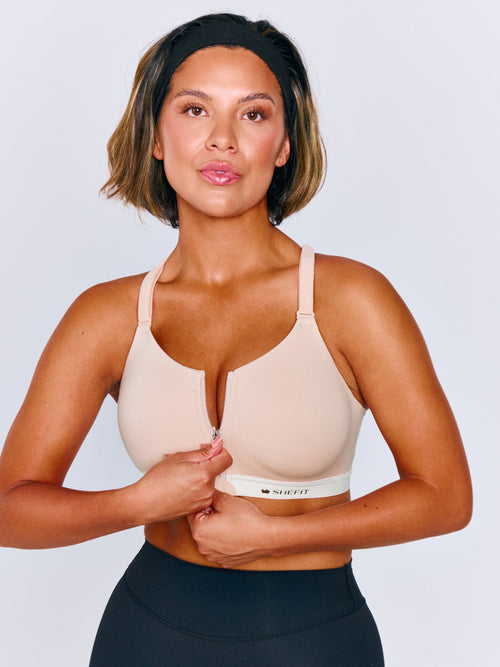
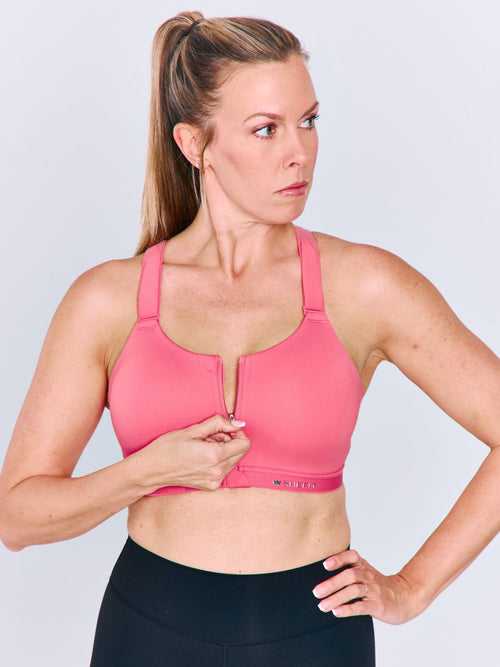
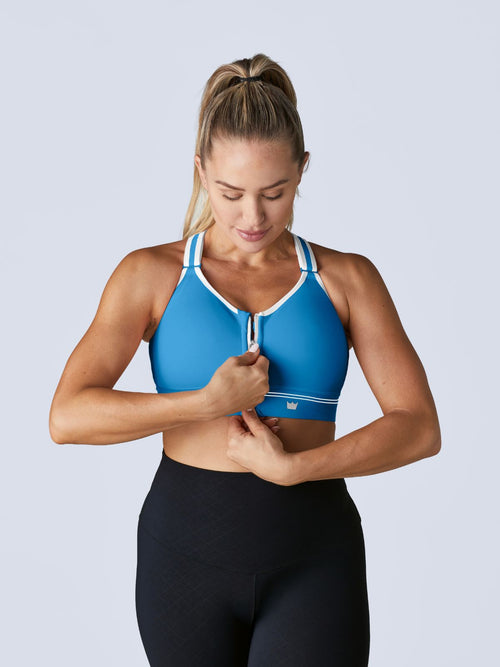
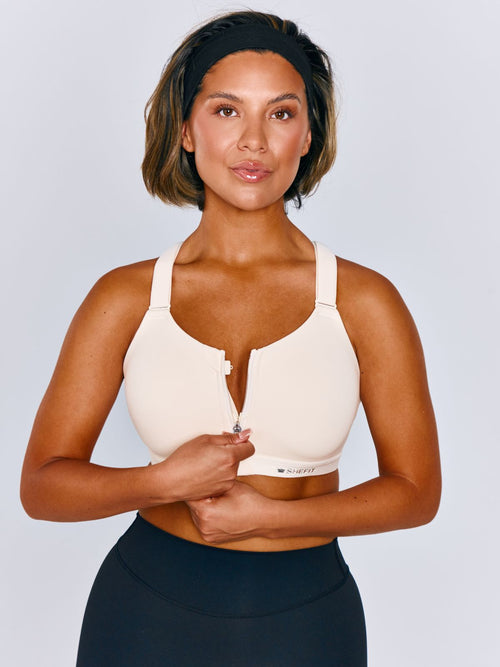
At SHEFIT, we build bras around that assumption. Our patented Zip. Cinch. Lift.® system means the front zipper gets the bra on and off, the rib band cinches to the compression you actually want, and the straps adjust for the lift you need. A body that changes needs a bra that adjusts with it, not a fixed compression shell you have to size out of every few years.
What Actually Changes About Breast Support With Age
Three things happen at once, and they compound. Glandular tissue gradually gives way to fat tissue, the skin over the breast loses laxity, and the Cooper's ligaments that hold breast tissue in position weaken. Together they cause what researchers call inferior-lateral migration, which most women simply experience as sagging [1].
That same study asked women in this age group what they actually prioritize in a bra, and the answers were not what marketing tends to assume. Comfort, staying in place, and fit came ahead of appearance. Shoulder straps, torso silhouette, and breast shape all registered as distinct concerns rather than one blurred idea of "support." Eleven separate variables mattered enough to name, which tells you how specific the requirements get once a body stops behaving the way it did at 35.
Menopause accelerates the composition side of it. As glandular tissue decreases and fat tissue rises, the skin overlying the breast thins and the elasticity of the internal supporting structures drops [2]. The practical consequence is that the breast becomes less able to support itself, which means more of the job shifts to whatever you are wearing.
This is where it stops being cosmetic. A multicenter survey of 438 respondents found that more than a quarter, 27.4%, said a lack of breast support had prevented them from being active or exercising, with age, breast size, and household income all statistically significant factors [3]. The same survey found breast pain affects up to 60% of women even at rest, and gets more frequent once they start moving.
Read that back. Inadequate support is not a comfort complaint at this stage of life. It is one of the reasons women stop exercising. If shape and volume have shifted enough that your old coverage no longer works, our guide to full-coverage sports bras walks through what changes and what to look for.
Why Unsupported Movement Costs More As You Get Older
Research led by the University of Portsmouth with Brooks Running found that women running in a poorly supportive bra shorten their stride by 4cm, which adds up to roughly an extra mile over the length of a marathon [2]. You are working harder for the same distance, and the bra is the reason.
That penalty does not only apply to runners. Shortened stride is the body bracing against movement it cannot control, and the same instinct shows up in a walking pace you cannot quite hold, a class you leave early, or a gait that tightens through the shoulders. Most women read those as fitness declining. Often it is compensation.
The longer-term concern is structural. Repeated unsupported movement stretches the skin over the breast and the Cooper's ligaments within it, and that stretching may cause irreversible damage over time. Ligaments that have already weakened with age have less margin for it. At this stage, support is protective equipment.
What to Look For in a Sports Bra as Your Body Changes
The Good Housekeeping Institute Textiles Lab, which tests bras with both lab measurement and real-world wearers, points to a consistent set of priorities for older wearers: wide straps that do not dig, closures that are easy to manage with limited hand or shoulder mobility, and honest stretch-recovery in the fabric [4]. We would add one more that most guides miss, which is adjustability after purchase, since the ability to retune tension is what lets one bra survive the next change.
The fastest way to know whether your current bra is working is to name what it is doing wrong. Most fit failures announce themselves clearly once you know the symptom.
| What you notice | What it means | Consequence if you leave it |
|---|---|---|
| Bra rides up into the armpits | Too large | Causes chafing under the arm |
| Straps slide off the shoulders | Too large | Straps stop contributing lift |
| Gapping between cup and breast | Too large | Breast tissue moves freely inside the cup |
| Band does not lay flat against the ribcage | Too large | Band cannot anchor the bra during impact |
| Band rides up the back | Too large | Support transfers to the shoulders and neck |
| Breasts bulge over the top or sides | Too small | Persistent pressure and visible spillage |
| Straps dig in and pinch | Band too large | Shoulder soreness and marking |
| Cannot fully scoop breasts into the cups | Too small | Tissue stays trapped in the band |
| Hardware twists when tightening | Too small | Cinching cannot reach correct tension |
Why adjustability matters more now than it used to
Most sports bras are fixed compression: the fabric decides how much support you get, and your only variable is which size you buy. That works when your body holds steady. It stops working when band measurement, bust measurement, and tissue density are all drifting on separate timelines, which is exactly what happens through and after menopause.
An adjustable system changes the math. The rib band cinches to the compression you want today, and the straps set lift independently of it. When your ribcage measurement shifts by an inch, you retune rather than re-buy. When one week calls for a brisk walk and the next calls for a longer one, the same bra handles both at different tensions.
Telling three similar-looking problems apart
One distinction worth keeping straight, because all three look similar in a mirror. Armpit skin becoming visible is normal anatomy showing once a bra actually lifts. Spillage is breast tissue pushing over the top or sides of the cup. Chafing from fabric riding into the armpit means the bra is too big. They call for three different responses.
A note on the band while you are diagnosing. The majority of a bra's support, roughly 80 to 90%, comes from the band rather than the straps. Jené Luciani Sena, author of The Bra Book, puts the figure at 80%; our own fitters put it closer to 90%. Either way, a band that has stopped sitting snug against your ribcage is the first thing to fix, not the straps.
How to Find Your Right Size as Your Body Changes
Bra sizing is not regulated, so the size you wear at one brand does not predict the size you need at another. Most women are in the wrong size and have simply adapted to it. Start from measurements rather than the cup letter you have carried around for twenty years.
- Wear a comfortable everyday or t-shirt bra, unlined if possible. Do not measure in a compressive workout bra, since it skews the numbers small.
- Measure your bust: wrap a fabric tape around your back and up to the fullest part of the bust, just above the nipple. Pinch the ends together at center chest, keep the tape flat, and round to the nearest whole inch.
- Measure your band: same method, but directly under the bust at the ribcage. Round to the nearest whole inch.
- Take both numbers to our size charts. Find where the bust measurement lands first, then use the band measurement to pin down the size.
- If you land between two sizes, choose the larger size for more coverage and the smaller size for more control.
Two things to know before you order. Our sizes run XS to 6Luxe in AA to I cups, so if you are used to hunting for an XL you are looking for Luxe instead. And your traditional bra size, the band-and-cup number, is a starting point for cross-referencing the chart, never the final answer. If you have been sister-sizing to compensate for a band that stopped fitting, our sister size guide explains what that trade actually does to your support.
Expect the fit to feel snug. Supportive fabric has to be snug to control movement through compression, the way a running shoe feels firm the first time you lace it. Snug like a hug is correct. Sharp pain or heavy chafing is not, and that is worth a conversation with our team rather than a size change.
The Best SHEFIT Options for Staying Active
All three of our core bras use the same adjustable system, so the choice comes down to how much movement you are asking the bra to control. Every one runs $69 in sizes XS through 6Luxe.
| Bra | Support level | Best for |
|---|---|---|
| Ultimate Sports Bra | Highest | Running, HIIT, tennis, anything with real impact |
| Flex Sports Bra | Medium to high, depending on cup size | Strength training, hiking, group fitness, brisk walking |
| Emerge Sports Bra | Medium | Yoga, pilates, walking, everyday wear |
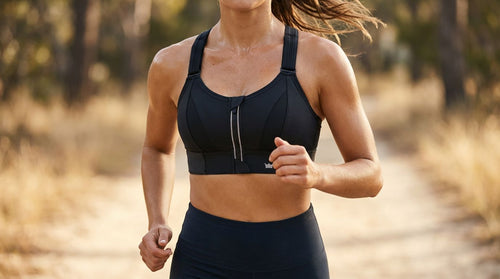
The Ultimate Sports Bra is the one to reach for if you are still doing higher-impact activity. In biomechanics research at the University of Memphis, vertical breast motion in the Ultimate Sports Bra measured 33% below the low-support condition and more than 50% below values previously reported for high-support bras from other leading sportswear companies. If a treadmill or a pickleball court is in your week, this is the level of control that keeps you on it.
The Flex Sports Bra sits in between, and we describe it two-sidedly on purpose: it is more supportive than other brands' high support bras, but not as strong as her sister bra, the Ultimate Sports Bra. For strength work, hiking, and classes where you are moving steadily rather than pounding, it is usually the right amount of bra.
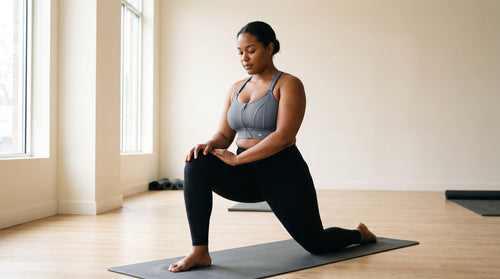
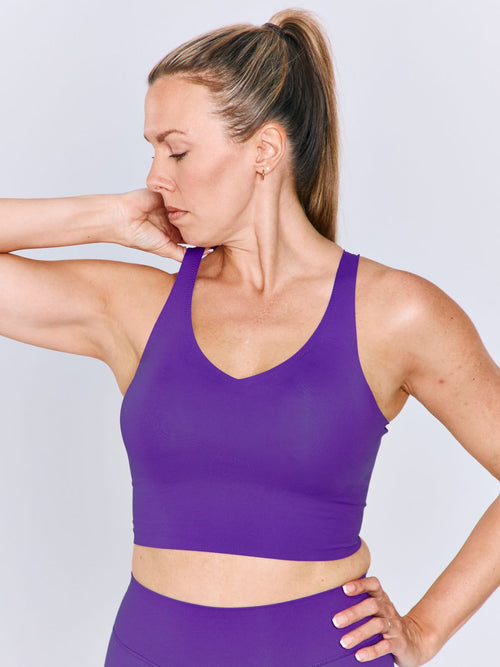
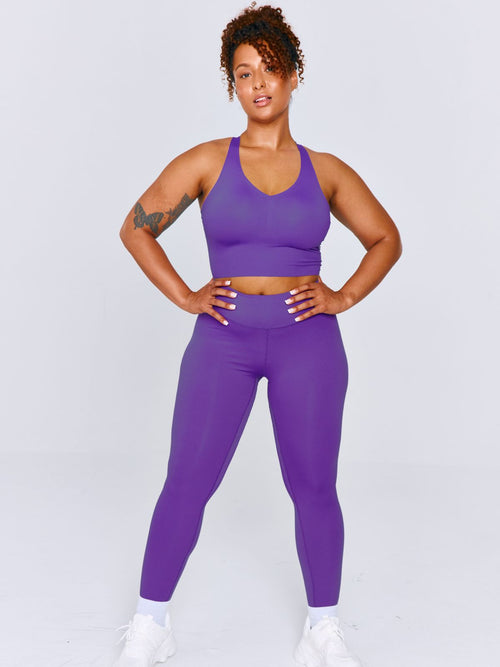
The Emerge Sports Bra is our recommendation for lower-movement days and all-day wear. It is wire-free with an integrated pad and a smooth cup, so it works under clothes without the pressure points that make an underwire unbearable when skin has thinned. For many women in this age group it becomes the bra they reach for most, with the Ultimate or Flex Sports Bra reserved for workouts.
If you are torn between them, our bra comparison page lays out support level, coverage, and fabric side by side.
A practical note on committing to a size. Our Sure-Fit Promise covers 30-day returns with free exchanges, which matters more than usual here: if your measurements have moved recently, the first size you order is a hypothesis. Getting it wrong once and exchanging is a better outcome than staying in something that stopped fitting three years ago because replacing it felt like a gamble.
Once it arrives, run a quick check before you commit. Scoop each breast fully out of the rib band and into the cup. Cinch the band until it sits flat and snug against your ribcage without restricting your breathing. Then adjust the straps last, for lift rather than for tightening. If you find yourself pulling the straps hard to get support, the band is too loose and the straps are doing a job they were never meant to do.
Sports Bra Questions Older Women Ask Most
What type of bra is best for older breasts?
An adjustable, wire-free bra with a firm band and wide straps. As glandular tissue gives way to fat tissue and skin thins, rigid underwires and fixed compression stop accommodating the shape change. A cinchable band lets you retune support as your body shifts instead of buying a new size every time it does.
What are some good sports bras for older women?
Match the bra to the movement. Our Ultimate Sports Bra handles running and high-impact work, the Flex Sports Bra covers strength training and hiking, and the Emerge Sports Bra suits yoga, walking, and everyday wear. All three adjust at the band and straps, which matters more than the label on the tag.
What is the best bra for women over 65?
The one with a band that still sits snug against your ribcage, since that band does most of the work. Look for wide non-digging straps and a closure you can manage comfortably, both of which the Good Housekeeping Institute Textiles Lab flags as priorities for this age group [4]. Measure first rather than assuming your old size still applies.
What type of bra should a 70 year old wear?
For most days, a wire-free medium-support bra you can wear for hours without pressure points. Our Emerge Sports Bra is built for exactly that, with a smooth wire-free cup and an integrated pad. If you are still doing higher-impact activity, step up to a higher-support option for those sessions rather than compromising all day.
Do I need a different bra now that I am past menopause?
Probably a different size, and possibly a different type. Breast composition changes most prominently during menopause, with fat tissue rising as glandular tissue falls and the internal supporting structures losing elasticity. Remeasure rather than assuming, because both the band and bust numbers commonly move.
Is it worth wearing a sports bra if I only walk?
Yes. Walking still produces repeated breast movement, and repeated unsupported movement may cause irreversible damage to the skin and Cooper's ligaments over time. A medium-support bra that fits well is a reasonable everyday standard, not overkill.
Getting the Next Twenty Years Right
The research is consistent on both halves of this. Breasts change with age in ways that make external support more important, and inadequate support is one of the things that stops women being active. Those two facts point in the same direction: this is the stage of life where fit is worth taking seriously, not the stage where it stops mattering.
Measure yourself this week, honestly, in a non-compressive bra. Then pick the support level that matches what you actually do, not what you used to do. A bra that adjusts with your body is the one you will still be wearing in five years, and the one that keeps the walk, the class, or the run on the calendar.
References
[1] Joanna Scurr, J. H. Deeg. "The influence of ageing on bra preferences and self-perception of breasts among mature women." European Journal of Ageing (via PMC/NIH), 2014. https://pmc.ncbi.nlm.nih.gov/articles/PMC5549204/
[2] "Do our sports bra needs change with age?" Stylist.co.uk, 2021. https://www.stylist.co.uk/fitness-health/wellbeing/sports-bra-breast-needs-age/541629
[3] "Sports Bra Preferences by Age and Impact of Breast Size on Physical Activity." International Journal of Environmental Research and Public Health (via PMC/NIH), 2021. https://pmc.ncbi.nlm.nih.gov/articles/PMC8657319/
[4] Amanda Constantine, Good Housekeeping Institute Textiles Lab. "Best Bras for Older Women, Tested by Experts." Good Housekeeping. https://www.goodhousekeeping.com/clothing/bra-reviews/g61110323/best-bras-for-older-women/