Labor Day Weekend Free Economy Shipping Shop Now


Three miles into a tempo run, your sports bra starts losing the fight. Your breasts move independently of your stride, each one pulling in a different direction with every footfall. The band rides up. The straps dig in where they shouldn't. You shorten your run, not because your legs quit, but because your bra did. The design of that bra, how it manages each breast, determines whether you finish that run or walk it in early.
The term for a bra that gives each breast its own cup space is encapsulation. It is one of the most misunderstood categories in sports bra design, and choosing the right approach (encapsulation, compression, or a hybrid of both) affects everything from comfort to ACL injury risk. At SHEFIT, we have spent years refining a design that combines both approaches, because the research keeps showing that neither one alone is enough for high-impact training.
This guide covers what encapsulation actually means, how it compares to compression and hybrid designs, who benefits most from each approach, and what the peer-reviewed research says about why individual breast support matters more than most women realize.
What Is an Encapsulation Sports Bra?
An encapsulation sports bra surrounds each breast in its own structured cup, supporting the left and right breast independently rather than pressing them both against the chest wall as a single unit. Each breast gets its own containment zone with cup walls that limit movement in three directions: up and down, side to side, and front to back.
This individual cup design does two things that compression alone cannot. First, it prevents breast-to-breast friction, a common source of chafing during longer workouts or runs. Second, it supports the Cooper's ligaments in each breast separately. Cooper's ligaments are the connective tissue that gives breasts their shape and internal structure. During high-impact exercise, unsupported breast tissue moves through multiple planes of motion, placing repeated stress on those ligaments. Encapsulation limits that range of motion by containing each breast within a defined space.
Where compression bras flatten both breasts against the ribcage to restrict overall movement, encapsulation preserves a more natural breast shape while still providing structure. For women who find compression uncomfortable, restrictive, or unflattering, encapsulation offers an alternative that controls movement without the pancake effect.
Encapsulation vs Compression vs Hybrid: What's the Difference?
This is the question that trips up most shoppers. All three design types reduce breast movement during exercise, but they use completely different mechanisms to get there.
|
Feature |
Hybrid (Encapsulation + Compression) |
Encapsulation |
Compression |
|---|---|---|---|
|
Mechanism |
Individual cups with added compressive force |
Individual cups surround each breast separately |
Presses both breasts against chest wall as one unit |
|
Shape |
Natural shape with added control |
Natural, separated silhouette |
Flattened, uni-boob silhouette |
|
Best cup range |
All sizes (A through I+) |
B-DD |
A-C |
|
Best activity level |
Medium to high impact |
Medium to high impact |
Low to medium impact |
|
Friction prevention |
Prevents breast-to-breast contact |
Prevents breast-to-breast contact |
Does not separate breasts |
|
Research edge |
Significantly greater comfort for larger busts |
Effective individual support |
Simple, affordable |
That last row matters. A 2010 study published in Medicine & Science in Sports & Exercise found that bras incorporating both breast elevation and compression provided significantly less breast discomfort compared to standard encapsulation bras alone for women with large breasts during physical activity [1]. Pure encapsulation works. Pure compression works. But the research shows that combining both delivers the strongest results, especially for larger cup sizes at higher impact levels.
If you have read our guide to compression sports bras, you already know the strengths and limits of compression-only designs. Encapsulation fills the gaps that compression leaves open, and hybrid brings both together.
Who Should Wear an Encapsulation Sports Bra?
Two factors drive this decision: breast size and activity level. Neither one alone tells the full story.
Women with D+ cup sizes generally need encapsulation or hybrid support because compression alone cannot manage the volume and independent movement of larger breasts. Compression works by pressing everything flat, but above a certain cup size, that pressure becomes uncomfortable without actually controlling multi-directional bounce.
Women with A through C cups have more flexibility. Compression is often enough for low to medium impact activities like yoga, walking, or cycling. But a C cup doing box jumps or HIIT circuits faces forces that compression alone may not contain.
The consequences go beyond soreness. A 2017 study in the Journal of Sports Sciences found that without sufficient breast support, women experience decreased willingness to exercise and increased breast discomfort or pain [2]. The bra you choose affects whether you keep exercising at all.
|
Activity Level |
A-C Cups |
D-DD Cups |
DDD/F+ Cups |
|---|---|---|---|
|
Low impact (yoga, walking) |
Compression |
Encapsulation or hybrid |
Hybrid |
|
Medium impact (cycling, strength training) |
Compression or encapsulation |
Hybrid |
Hybrid |
|
High impact (running, HIIT) |
Encapsulation or hybrid |
Hybrid |
Hybrid |
The pattern is clear: a hybrid approach covers the widest range of sizes and activities. As impact level rises and cup size increases, the case for combining both design types gets stronger.
For a deeper look at how impact levels affect your support needs, we break down the specific forces at play in each activity category.
The Science Behind Encapsulation: Why Individual Breast Support Matters
Most conversations about sports bras stop at comfort. The research goes further. Proper breast support affects how your entire body moves during exercise, from your knees to your trunk, and the downstream effects are more significant than most athletes realize.
A 2022 study published in Frontiers in Sports and Active Living found that greater breast support was associated with reduced peak knee valgus angles and greater trunk flexion during landing movements [3]. Knee valgus (when the knees cave inward during landing) is one of the biomechanical profiles most consistently studied in relation to ACL injury risk. Women wearing high-support bras showed landing mechanics associated with lower injury risk compared to women wearing low-support or no-support conditions.
A companion study from the same research group found that greater breast support is associated with reduced oxygen consumption and greater running economy during treadmill running [4]. A properly supportive bra helps you run more efficiently, using less energy at the same pace.
Research at the University of Memphis Breast Biomechanics Research Center put specific numbers on this. Testing found that the high-support condition reduced vertical breast displacement by more than 50% compared to previously reported values from other brands' high-support sports bras. That gap between what most brands call "high support" and what actually controls breast motion during impact is exactly the problem that hybrid designs solve.
The takeaway: breast support is not a comfort preference. It is a performance variable and an injury prevention factor, and the design of the bra (encapsulation, compression, or hybrid) determines how well it does the job.
How to Know If an Encapsulation Sports Bra Is the Right Fit for You
Design type only matters if the bra actually fits. An estimated 85% of women wear the wrong bra size [6], and most of those women have simply gotten used to the discomfort. Adjustable features help, but starting from the right size is still the foundation.
Key Decision Factors
Three questions determine which design type suits you:
-
What is your cup size? D+ cups generally need encapsulation or a combined design. A through C cups have more range but should still consider hybrid for high-impact activities.
-
What is your primary activity? High-impact training demands more support than yoga or walking. Match the design to the force.
-
What matters to you aesthetically? Compression creates a flattened silhouette. Encapsulation and hybrid preserve a more natural separated shape.
If you fall between two sizes, SHEFIT's guidance is: larger size for more coverage, smaller size for more control.
Fit Checklist
Once you have the right size and design type, run through these checkpoints:
-
Band sits level across your back and does not ride up when you raise your arms
-
Each breast sits fully within its cup with no tissue spilling over the top or sides
-
Straps hold firm without digging into your shoulders
-
No gapping between the cup and your breast
-
The bra passes the bounce test: jump in place ten times and check for excessive movement
-
Visible armpit skin is normal. When a bra lifts properly, it raises breast tissue and exposes the skin at the armpit crease. That is the bra doing its job, not spillage. Spillage means tissue pushing over the top or sides of the cup.
For a complete measurement walkthrough and SHEFIT's inches-based size chart, our sports bra sizing guide covers the full process step by step.
Common Misconceptions About Encapsulation Sports Bras
"Encapsulation bras are only for large busts." Encapsulation works across all cup sizes. What changes is whether you need pure encapsulation or a combined approach. Women with smaller busts benefit from separated cup support for the same reason: it prevents breast-to-breast friction and provides shape-preserving containment regardless of volume.
"Encapsulation and compression are opposites, and you have to pick one." They are different mechanisms, not competing philosophies. The best performing sports bras combine both. Research confirms that bras incorporating breast elevation with compressive force provided significantly less breast discomfort than standard encapsulation alone for larger busts during physical activity.
"Underwire is required for encapsulation." Structured cups can encapsulate each breast without any wire. Wire-free encapsulation designs use cup construction, adjustable bands, and strategic fabric tension to achieve containment. Several high-performing bras on the market use this approach.
"You need to double up for more support." Layering two sports bras creates uneven pressure, restricts breathing, and does not address the root problem: neither bra alone was designed to do the job. One properly fitted hybrid bra will outperform two layered bras every time.
"Encapsulation alone is the gold standard for high-impact." This one is partially true but incomplete. Pure encapsulation is effective for medium impact and for smaller cup sizes at higher impact. For D+ cups during running, HIIT, or jumping, the research shows hybrid designs (encapsulation combined with compression) deliver measurably better outcomes.
SHEFIT Sports Bras: Encapsulation AND Compression Combined
Every finding in this article points in the same direction: pure encapsulation is effective, but hybrid design (encapsulation plus compression working together) is what the research shows works best for high-impact and larger cup sizes. That is exactly what both of our sports bras deliver.
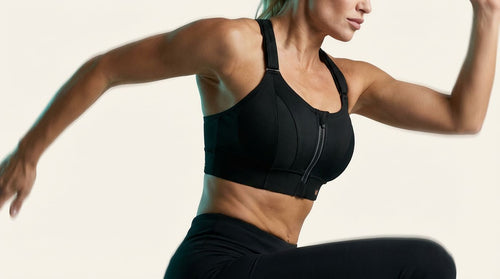
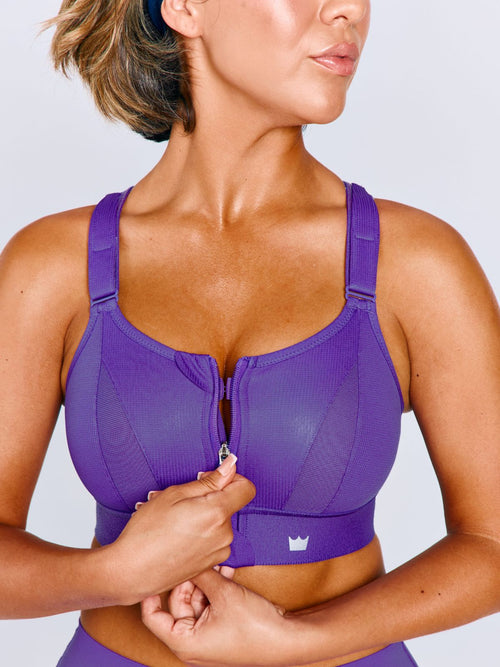
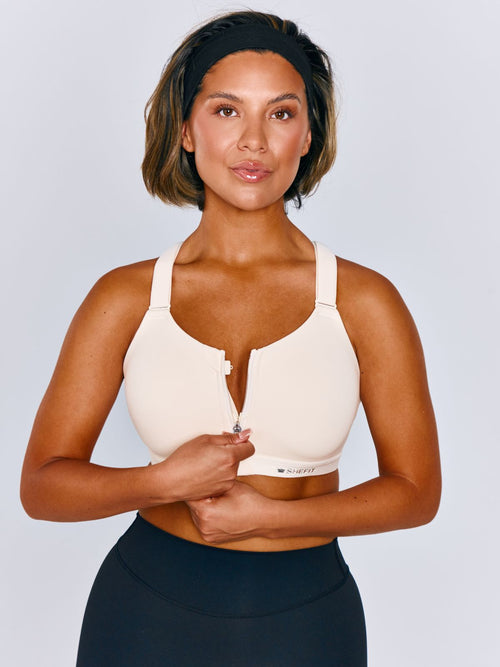
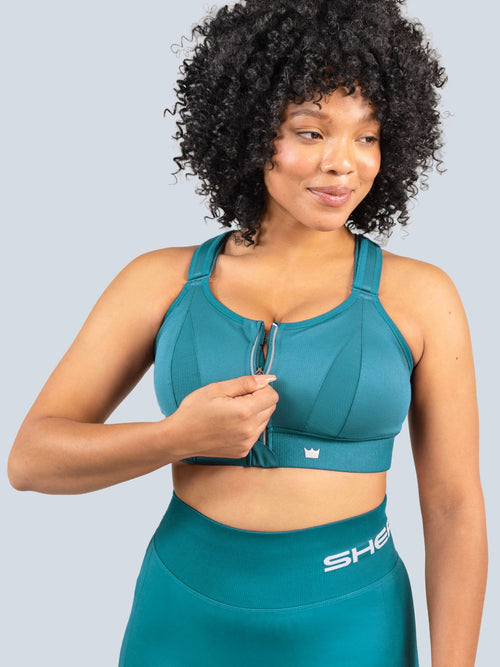
We do not make encapsulation-only bras. Both the Ultimate Sports Bra and the Flex Sports Bra pair individual cup containment with compressive support. Each breast gets its own space while added compression holds everything in place during impact. The result is a bra that controls multi-directional movement without flattening you or relying on a single mechanism.
Ultimate Sports Bra
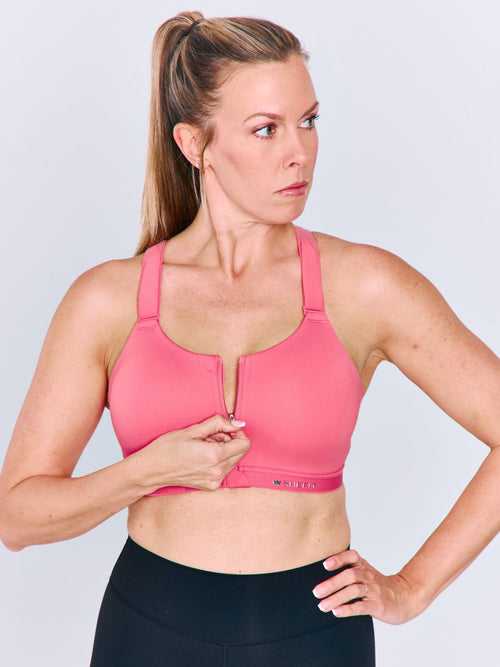
The Ultimate is our maximum support option across all sizes, XS through 6Luxe, AA through I cups. It features patented adjustable shoulder straps and rib band for a truly custom fit, a front zipper for easy on and off, non-stretch straps that maintain lift wash after wash, and removable modesty pads.
University of Memphis research found that the Ultimate reduced vertical breast displacement by more than 50% compared to other brands' high-support options [5]. That is not a marketing claim. It is a peer-reviewed finding from an independent biomechanics lab.
Best for: running and high-impact training where maximum support is non-negotiable.
Flex Sports Bra
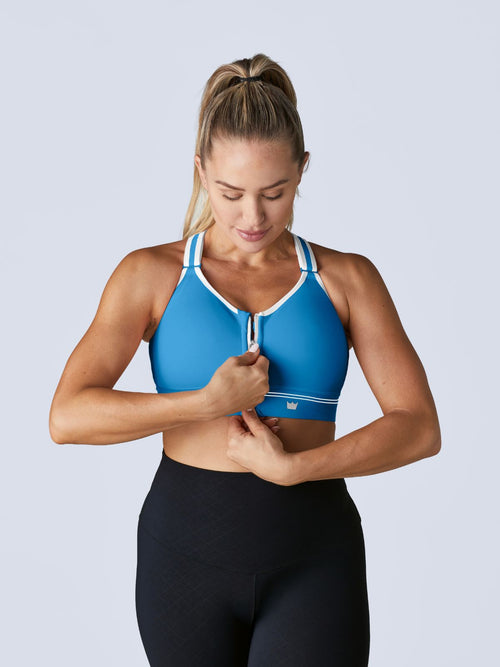
The Flex pairs both design approaches with smooth cups for a sculpted silhouette, XS through 6Luxe, AA through I cups. It shares the same patented adjustable features as the Ultimate in a slightly different profile. The Flex delivers high-impact support for 32C and under, and medium-impact support for larger sizes. Our medium-impact rating delivers support that rivals what other brands call high-impact.
Best for: varied-intensity workouts including cycling, strength training, and court sports.
Side-by-Side Comparison
Here is how the two bras compare across key features.
|
Feature |
Ultimate Sports Bra |
Flex Sports Bra |
|---|---|---|
|
Price |
$69 |
$65 |
|
Design |
Encapsulation + compression |
Encapsulation + compression |
|
Cup style |
Individual cup space, removable modesty pads |
Smooth cups, sculpted fit |
|
Closure |
Front zipper |
Front zipper |
|
Straps |
Non-stretch, adjustable |
Adjustable |
|
Size range |
XS-6Luxe, AA-I cups |
XS-6Luxe, AA-I cups |
|
Impact level |
High impact, all sizes |
High impact (32C and under), medium (larger sizes) |
|
Best activities |
Running and high-impact training |
Cycling and strength training |
|
Durability |
Tested to 25 wash cycles |
Tested to 25 wash cycles |
Both bras are backed by 75,000+ five-star reviews. And through the Sports Bra Project, we have donated over $1.2M to help women access the support they need.
Find your fit with the Ultimate Sports Bra or the Flex Sports Bra.
FAQs About Encapsulation Sports Bras
What is an encapsulation sports bra?
An encapsulation sports bra uses individual cups to surround and support each breast separately, rather than pressing both against the chest wall as one unit. This design prevents breast-to-breast friction and controls multi-directional movement.
Is encapsulation or compression better for running?
For most runners, hybrid is best. A bra that pairs individual cups with compressive force controls movement more effectively than either design alone. Cup size matters too: D+ cups running at high impact need hybrid support, while smaller busts may be adequately supported by compression alone at lower distances.
Can small-breasted women wear encapsulation sports bras?
Yes. Encapsulation is not size-dependent. Women with smaller busts benefit from separated cup support for shape preservation and friction prevention. For high-impact activities, a hybrid approach adds compressive force on top of that containment.
Do encapsulation sports bras have underwire?
Not necessarily. Structured cups can encapsulate each breast without wire. Both SHEFIT sports bras use a wire-free hybrid design, relying on cup construction and adjustable features instead of underwire.
How do I know if my encapsulation sports bra fits?
Run a five-point check: band sits level and does not ride up, each breast sits fully in its own cup with no spillage, straps hold without digging, no gapping between cup and breast, and the bounce test shows minimal movement. Remember that visible armpit skin from proper lift is normal, not spillage.
Are encapsulation sports bras good for high-impact activities?
Encapsulation alone handles medium impact well. For high-impact activities like running, HIIT, or horseback riding, combining cup containment with compression provides measurably better support. Peer-reviewed research found that high-support hybrid designs reduced breast displacement by more than 50% versus other brands' high-support bras.
What size encapsulation sports bra should I get?
Start with your actual underbust and bust measurements in inches rather than relying on a cup letter from another brand. Bra sizing is not standardized across brands. SHEFIT's size chart and measurement guide walks you through the full process. If you land between two sizes: larger for more coverage, smaller for more control.
How is SHEFIT's design different from a standard encapsulation bra?
Both the Ultimate and Flex pair individual cup containment with compressive support, not encapsulation alone. They feature patented adjustable shoulder straps and rib band for a custom fit, non-stretch straps on the Ultimate for consistent lift, and a size range from XS to 6Luxe (AA through I cups). That hybrid engineering, backed by University of Memphis research, is what sets them apart from standard encapsulation-only bras.
The right sports bra is not the one with the best label or the highest price tag. It is the one that matches your cup size, your activity, and the way your body actually moves. If your current bra is losing the fight before you finish your workout, the answer is not to push through. It is to rethink the design.
References
[1] McGhee, D.E. & Steele, J.R. "Breast elevation and compression decrease exercise-induced breast discomfort." Medicine & Science in Sports & Exercise, 2010. https://pubmed.ncbi.nlm.nih.gov/20019639/
[2] Risius, D., Milligan, A., Berns, J., Brown, N., & Scurr, J. "Understanding key performance indicators for breast support: an analysis of breast support effects on biomechanical, physiological and subjective measures during running." Journal of Sports Sciences, 2017. https://pubmed.ncbi.nlm.nih.gov/27291899/
[3] Fong, H.B., Nelson, A.K., Storey, J.E., Hinton, J., Puppa, M., McGhee, D., Greenwood, D., & Powell, D.W. "Greater Breast Support Alters Trunk and Knee Joint Biomechanics Commonly Associated With Anterior Cruciate Ligament Injury." Frontiers in Sports and Active Living, May 20, 2022. https://doi.org/10.3389/fspor.2022.861553
[4] Fong, H.B. & Powell, D.W. "Greater Breast Support Is Associated With Reduced Oxygen Consumption and Greater Running Economy During a Treadmill Running Task." Frontiers in Sports and Active Living, 2022. https://www.frontiersin.org/articles/10.3389/fspor.2022.902276
[5] Fong, H.B., Nelson, A.K., McGhee, D., Ford, K., & Powell, D.W. "Increasing breast support is associated with a distal-to-proximal redistribution of joint negative work during a double-limb landing task." Journal of Applied Biomechanics, 2022/2023. https://www.memphis.edu/healthsciences/pdfs/jab-biomech-2023.pdf
[6] McGhee, D.E. & Steele, J.R. "Optimising breast support in female patients through correct bra fit. A cross-sectional study." Journal of Science and Medicine in Sport, 2010. https://pubmed.ncbi.nlm.nih.gov/20451452/