Which Bra Is Right for You? Learn More


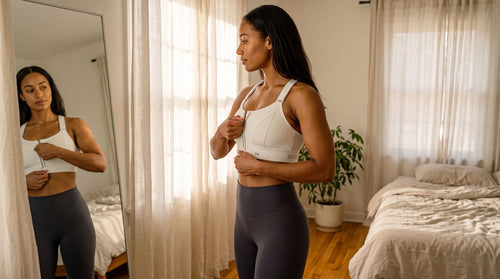
The first morning home after breast augmentation, getting dressed becomes a small engineering problem. Fastening a hook-and-eye bra means reaching behind your back, lifting and twisting your arms in exactly the way your chest is asking you to avoid. And the bras already in your drawer were sized for a body that has just changed.
Here is the short answer. A surgical bra comes first, usually the one your surgeon sends you home in. Many surgeons choose the SHEFIT Lounge Bra for this first stage. A soft, wire-free sports bra with a front closure follows once your surgeon approves the switch. The date of that switch differs from one practice to the next, and that difference is the most useful thing to understand going in. Your own surgeon's instructions outrank any general guide, this one included.
At SHEFIT, we design front-zip bras for each stage of this recovery, so we wanted to lay out what surgeons and medical institutions actually publish about this handoff. Below you will find six published protocols side by side, the features worth checking on any recovery bra, and the point where workout support starts to matter again.
The Surgical Bra Comes First, the Sports Bra Comes Second
The bra you wake up in has a specific job. West County Plastic Surgeons of WashU Medicine describes the medical compression bra used right after augmentation as a garment that keeps dressings in place, restricts implant movement, and reduces swelling, with greater support than a sports bra provides. Most of their patients wear it day and night for one to two weeks, then move to a supportive sports bra once the surgeon approves [1].
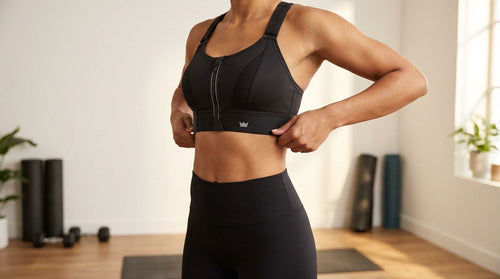
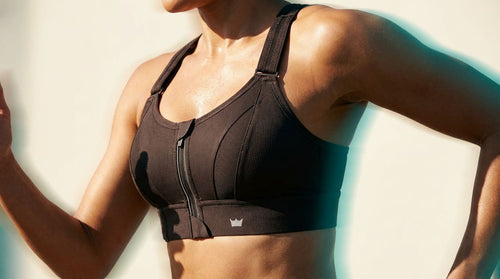
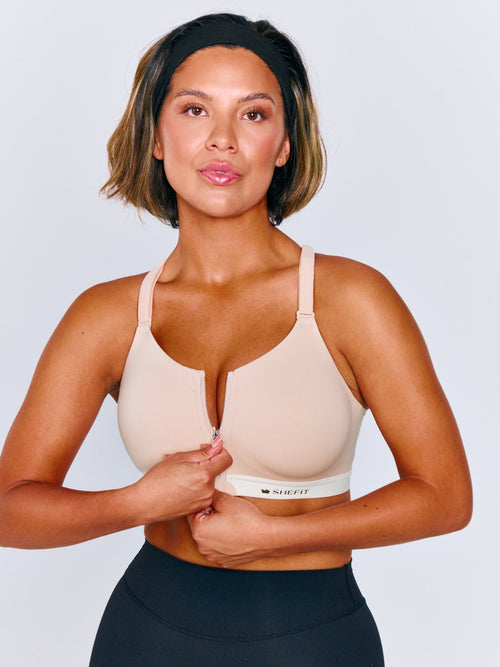
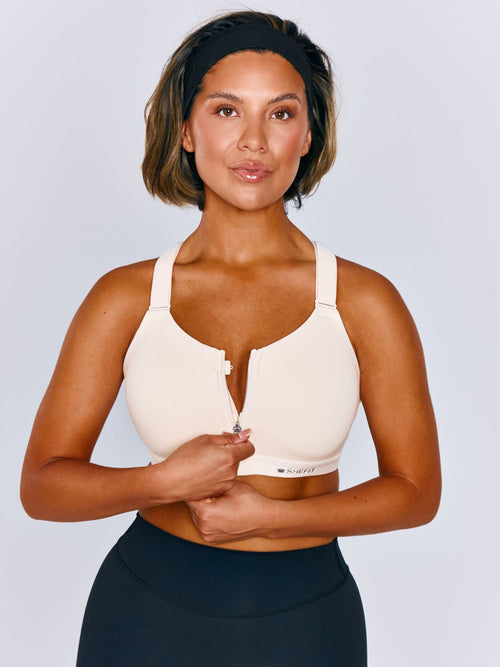
The American Society of Plastic Surgeons (ASPS) adds detail on what that first garment is. Its patient guide calls a postoperative compression bra a special, medical-grade garment, often made from nylon or elastic, designed to give gentle and regulated pressure to the surgical site [2]. Our Lounge Bra meets these requirements: soft nylon-blend fabric that fits snug against the body, a front zipper so you never reach behind your back, and wire-free seamless cups. That is why many surgeons send their patients home in it.
Put together, recovery usually moves through three bras in this order:
- The surgical or compression bra. Provided or specified by your surgeon, worn day and night through the first phase.
- A soft, wire-free sports bra. Takes over when your surgeon says the early phase is done.
- Your regular bras, underwire included. Return last, after your surgeon confirms the implants have settled.
The sports bra sits in the middle of that sequence as a transition garment. It picks up where the surgical bra leaves off, on your surgeon's timing, and it does not stand in for the garment you were discharged in. If you are still in that early stretch, the bra your surgeon gave you is the one doing the work.
Why Surgeons Do Not Agree on One Date
Search for a single switch date and you will find several, each from a credible source. That is because published protocols genuinely differ. Here is how six of them compare.
| Source | What it says about bras | What it says about underwire or exercise |
|---|---|---|
| Stanford Medicine Cosmetic Surgery | Front-closure sports bra; bra shopping at least 6 weeks after surgery [3] | No underwire during this period; no rigorous physical activity for 4 weeks |
| MedlinePlus (NIH) | Soft, wireless, supportive bra night and day for 2 to 4 weeks once dressings are off [4] | No heavy lifting, strenuous exercise, or overstretching the arms for 3 to 6 weeks |
| WashU Medicine West County Plastic Surgeons | Surgical bra day and night for 1 to 2 weeks, then a supportive sports bra once the surgeon approves [1] | No standard timeline for returning to underwire |
| ASPS member Dr. Anureet Bajaj | Surgical bra for 2 weeks, then any sports bra or bra without an underwire [5] | No underwire for about 2 to 3 months, until the implants have settled |
| Dr. Karen Horton, quoted by ASPS | Wait a full 3 months to get properly fitted for new bras [2] | No underwire for at least 3 months |
| UNC Plastic Surgery FAQ, Dr. Wu's protocol | No sports bra for the first month after surgery [6] | Push-up bra with a molded cup, underwire permitted, at 2 weeks |
Read across the rows and the spread is wide. One UNC surgeon's protocol holds off on sports bras for a full month, while Dr. Bajaj moves patients into one at two weeks. Underwire ranges from two weeks to at least three months.
None of these sources is wrong. Incision placement, implant position, and each surgeon's own protocol all shape the timeline, which is why the right date for you is the one on your discharge sheet.
What to Look For in a Sports Bra During Recovery
After the switch is approved, the bra itself matters. The guidance from the sources above lines up on five features:
- No underwire. Incisions often sit in the fold beneath the breast, right where a wire presses, and Dr. Horton advises no underwire for at least three months in the ASPS guide.
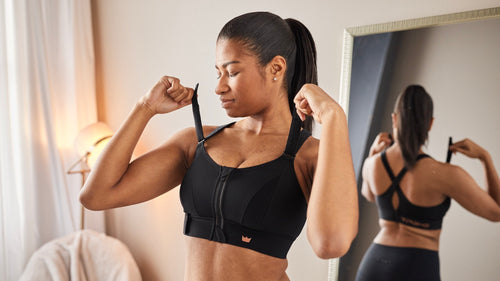
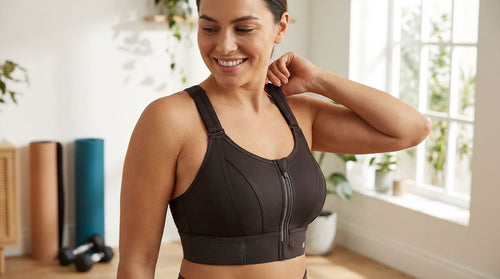
- A front closure. Stanford recommends a front-closure sports bra during recovery [3], and WashU points out that a front clasp means less stretching to get it on.
- Soft fabric against healing skin. MedlinePlus describes the bra to wear once dressings come off as soft, wireless, and supportive, so skip anything stiff or scratchy over the incision area.
- A wide band and wide straps. The ASPS guide notes that wide straps can reduce shoulder pain and pressure, and Dr. Horton adds that bands extending a little lower than the natural breast fold tend to feel best because an incision often sits there.
- Easy on and off. MedlinePlus advises against overstretching your arms for 3 to 6 weeks, so a bra you can step into or zip up beats one you have to pull over your head.
These are the features to check on any bra you consider during recovery, whoever makes it. A label that says "post-op" matters far less than whether the bra meets all five.
Why Your Size Will Change Before Your Bra Does
The size you are in two weeks after surgery is rarely the size you will settle into. Stanford Medicine notes that breasts "drop," or settle into their new pockets, after about three months. Swelling rises and falls along the way, so the fit can shift from one week to the next.
That timeline shapes how to shop. In the ASPS compression-bra guide, Dr. Horton recommends waiting a full three months to get properly fitted for new bras, so the final size and shape can be appreciated. Your pre-surgery bras will often not fit the new shape either, which makes it tempting to buy a full replacement set early. A few practical points help here:
- Buy only what recovery requires in the first weeks, ideally enough to rotate while one is in the wash.
- Hold off on a full new set until your surgeon says the implants have settled.
- When you do measure, measure in inches, since bra sizing is not standardized from brand to brand and a cup letter rarely carries over.
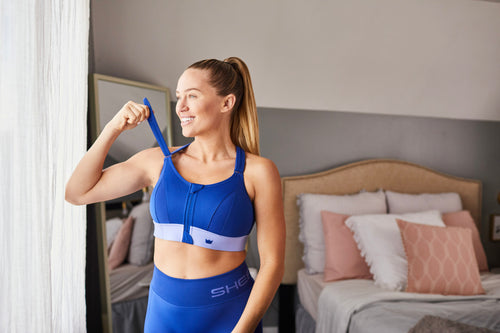
Because swelling and settling move the fit week to week, adjustability matters more during recovery than at almost any other time. Our patented Zip. Cinch. Lift.® design puts a zipper at the front, a cinchable rib band around your ribcage, and adjustable straps over your shoulders, so one bra can follow those changes instead of needing a new size each time. That is a fit feature, and it has no bearing on how you heal.
When you are ready to measure, our Fit Central page offers a size chart in inches or centimeters, a starting-size tool based on your current bra size, and a fit expert you can text. If you land between two sizes, the larger size gives more coverage and the smaller size gives more control.
Going From Recovery Bra to Workout Bra
Exercise comes back in stages, and the bra question changes once it does.
When Movement Returns
The timelines differ here too. MedlinePlus advises no heavy lifting, strenuous exercise, or overstretching of the arms for 3 to 6 weeks. Stanford advises avoiding anything that raises blood pressure for the first 2 weeks and rigorous physical activity for 4 weeks.
Dr. Bajaj, speaking to ASPS, tells patients they can start working out at about three weeks post-op, and that this means legs and arms but no chest. Recalling her own first run about two weeks after surgery, she said: "I felt like my breasts were going to fall off my chest" [5]. Her experience is a useful reminder that the first runs back feel different, and that bounce control becomes a real concern the moment your surgeon clears higher-impact movement.
Matching Support to the Activity
With exercise cleared, support level matters again, and it follows the activity:
- Walking, yoga, and everyday wear point to a medium-impact bra.
- Running, jumping, and lifting point to a high-support bra.
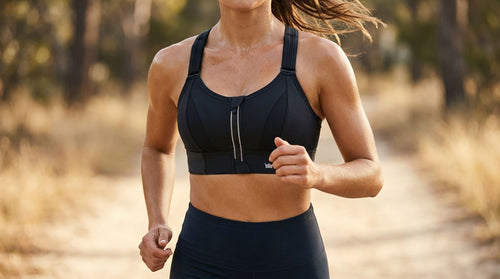
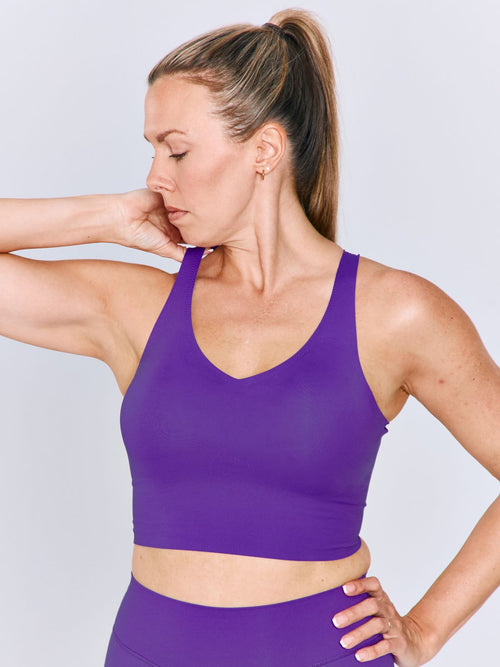
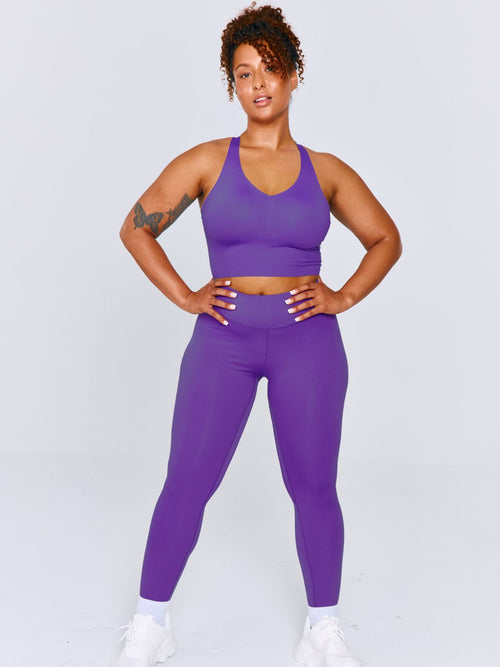
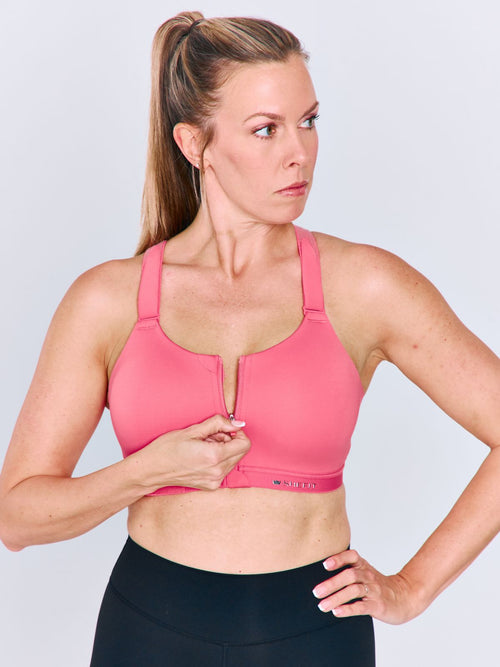
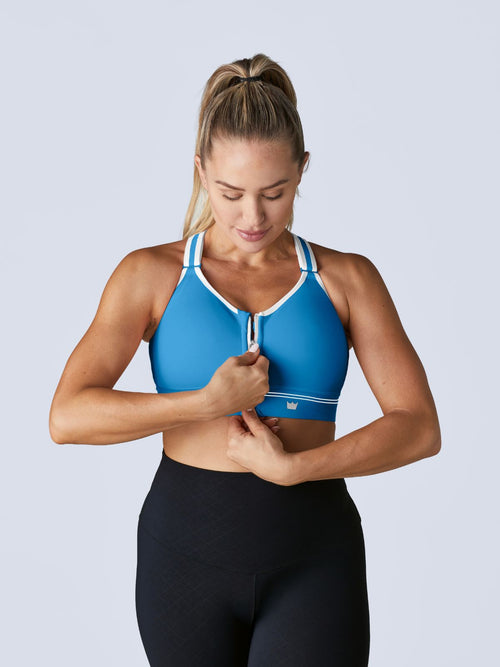
For training, our Flex™ Sports Bra gives medium-impact support, with wire-free seamless cups in four-way stretch fabric. The Ultimate Sports Bra® is the highest-support bra in our range, built for running and high-impact training. Both use Zip. Cinch. Lift.®, so each one closes with a front zipper.
Neither is a medical garment, and neither replaces your surgeon's timeline. They are the bras for the stage after it, and you can compare them with the rest of our sports bras whenever you are ready.
Where Our Bras Fit in Each Stage
If you want to shop, here is how our bras line up with the stages above. The Lounge Bra is made for the first weeks after surgery, and the three sports bras take over as your surgeon clears more movement.
| Stage | SHEFIT bra | Why it fits the stage |
|---|---|---|
| Right after surgery | Lounge Bra | The bra many surgeons send patients home in: zip front, seam-free construction, removable pads, and no wire |
| Return to light movement | Emerge™ Sports Bra | Medium support for C+ cups and high support for A-B cups, wire-free, seam-free smooth cups with a light integrated pad, and a locking front zipper |
| Return to training | Flex™ Sports Bra | Four-way stretch, wire-free seamless cups; medium impact |
| Return to high-impact training | Ultimate Sports Bra® | Highest support in our range, two-way stretch body fabric, removable padding |
The Lounge Bra covers the first weeks after surgery. The Emerge™ Sports Bra bridges the weeks of walks and light movement, and the Flex™ Sports Bra and Ultimate Sports Bra® come in when training does. All four zip at the front.
For the full range we suggest during and after breast surgery, see our breast surgery page. When your surgeon gives the go-ahead, find your fit.
Signs to Call Your Surgeon Before You Change Bras
A bra switch is a good moment to check in on how healing is going. MedlinePlus lists these signs as reasons to call your surgeon [4]:
- Increasing pain, redness, or swelling at the incision
- Yellow or green drainage, bleeding, or bruising at the incision
- A fever of 100°F (38°C) or higher
- Numbness or loss of motion
- Sudden swelling of the breast
One more thing to watch: if a new bra leaves deep marks, causes numbness, or makes it hard to breathe comfortably, take it off and call your surgeon about it. Fit problems during recovery are worth raising, and your surgeon can tell you whether to wait longer before trying again.
Questions Women Ask About Wearing a Sports Bra After Augmentation
Can I sleep in a sports bra after breast augmentation?
Many protocols include nighttime wear early on. WashU patients typically wear their surgical bra day and night for one to two weeks, and MedlinePlus describes a soft, wireless, supportive bra night and day for 2 to 4 weeks once dressings are off. Whether that nighttime bra can be a sports bra, and for how long, is your surgeon's call.
When can I wear underwire again?
It depends on the surgeon. Dr. Horton advises waiting at least three months, Dr. Bajaj about two to three months, and WashU says there is no standard timeline, while one UNC surgeon's protocol allowed underwire at two weeks. Your surgeon decides based on how your incisions and implants are healing.
Is a sports bra enough instead of a surgical bra?
Not in the early weeks. WashU notes that the surgical bra provides greater support than a sports bra immediately after surgery, and ASPS describes postoperative compression bras as medical-grade garments designed for gentle, regulated pressure on the surgical site. A sports bra takes over only after your surgeon signs off on the change.
When should I get professionally fitted?
Dr. Horton recommends waiting a full three months, so the final size and shape of your breasts can be appreciated. A fitting before then measures a shape that is still changing.
References
[1] "What Is the Best Bra After Breast Augmentation?" West County Plastic Surgeons of WashU Medicine, June 22, 2026. https://westcountyplasticsurgeons.wustl.edu/resources/faqs/breast-augmentation/what-is-the-best-bra-after-breast-augmentation/
[2] Alia Willson. "Finding comfort after breast surgery: A guide to compression bras and postsurgical garments." American Society of Plastic Surgeons, October 30, 2025. https://www.plasticsurgery.org/news/articles/finding-comfort-after-breast-surgery-a-guide-to-compression-bras-and-postsurgical-garments
[3] "Breast Augmentation." Stanford Medicine Cosmetic Surgery, March 4, 2021. https://med.stanford.edu/cosmeticsurgery/aestheticservices/Breast/breast-augmentation.html
[4] David A. Lickstein, MD, FACS (reviewer). "Cosmetic breast surgery - discharge." MedlinePlus, U.S. National Library of Medicine, February 17, 2025. https://medlineplus.gov/ency/patientinstructions/000273.htm
[5] Gabby Shacknai. "What to expect after your breast augmentation surgery." American Society of Plastic Surgeons, September 15, 2021. https://www.plasticsurgery.org/news/articles/what-to-expect-after-your-breast-augmentation-surgery
[6] "FAQs After Breast Surgery." UNC Department of Surgery, Plastic Surgery. https://www.med.unc.edu/surgery/plastic/wp-content/uploads/sites/773/2018/07/faqs-after-breast-surgery.doc