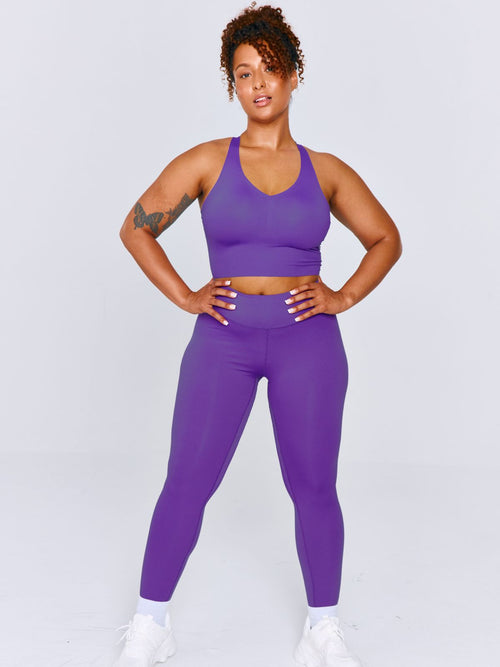
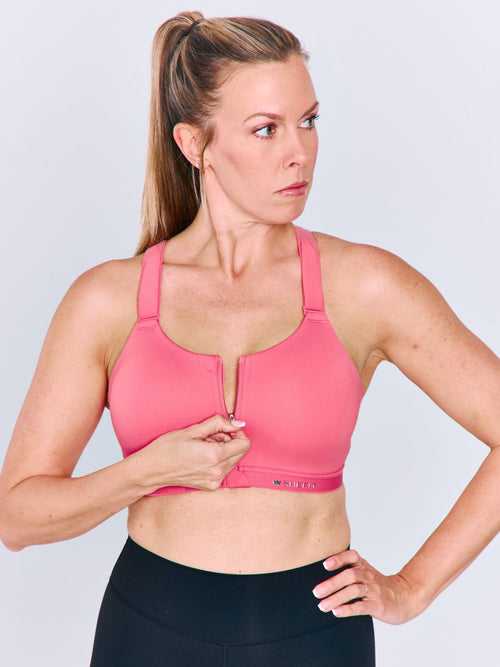
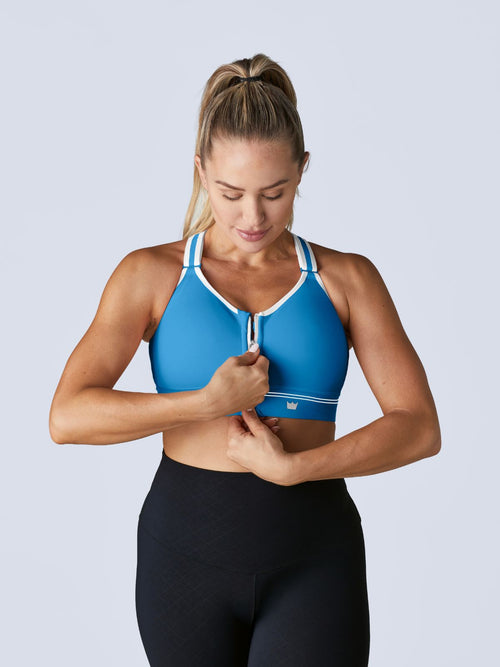
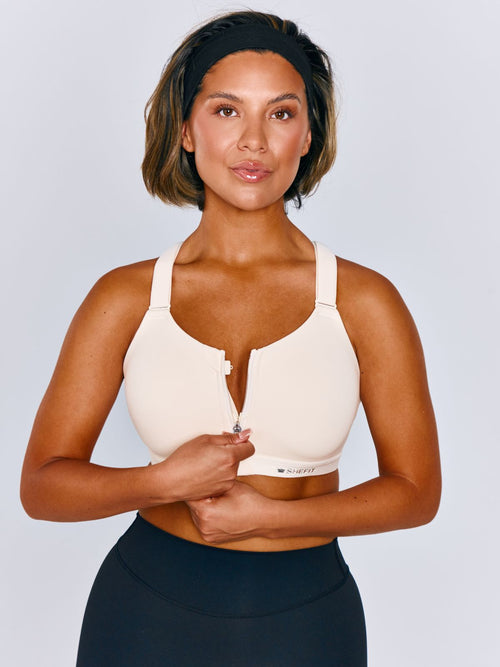
Which Bra Is Right for You? Learn More


Pull a lacy bralette and a sports bra out of the drawer and lay them side by side. They can look like cousins: both wire-free, both stretchy, both comfortable the second you put them on. Stand still in either one and you would be hard pressed to say which is "more supportive." The difference does not show up until you move. The moment you break into a jog, drop into a burpee, or even reach overhead in a slow yoga flow, those two garments stop behaving like cousins and start behaving like completely different tools.
At SHEFIT, we built our entire identity around one of those tools: the sports bra, and specifically how it fits the body it is supporting. So we spend a lot of time in the gap between "feels fine standing in front of the mirror" and "actually does its job once you start sweating." That gap is exactly where the bralette-versus-sports-bra question lives, and most people underestimate how wide it is.
By the end of this guide, you will know what each garment is genuinely built for, when a bralette is the right call and when it quietly lets you down, which activities make real support non-negotiable, and why the fit question matters more than the category question. The answer depends less on how the bra looks in the package and more on what you are asking it to do once it is on.
What Is a Bralette?
A bralette is a wire-free, lightly structured bra built around comfort rather than engineered support. There is no underwire, padding is minimal or absent, and the fabrics lean soft, usually cotton or modal or lace. What we love about bralettes is exactly what they promise, which is an easy, barely-there feel for low-key moments.
They show up in a handful of familiar styles:
-
Triangle: two soft triangular cups, often in lace, the most recognizable bralette shape
-
Bandeau: a strapless band of fabric across the bust, popular under off-the-shoulder tops
-
Longline: extends down the torso for a little more coverage and a crop-top look
-
Racerback: straps converge between the shoulder blades for a sportier silhouette
-
Lace: decorative styling meant to be seen, often layered under open or sheer pieces
Where bralettes shine is everyday, low-movement life. Think all-day casual wear and lounging on the couch, layering under a blouse, or sleeping. They are genuinely good at being comfortable and easy. That is the whole point of the category, and it is a real value. The trouble only starts when a bralette gets asked to do the job that sports bras were built for.
What Is a Sports Bra?
A sports bra is engineered for one purpose: to control breast movement during physical activity. That sounds obvious, but it drives every design decision and separates the real thing from a soft bra that happens to be stretchy. The reason the engineering matters comes down to anatomy. The female breast is passive tissue with little intrinsic support, so women rely on external breast support to control breast motion during athletic tasks [1].
Sports bras manage that motion through three approaches:
|
Design type |
How it works |
Best suited for |
|---|---|---|
|
Compression |
Presses breast tissue against the chest wall to limit overall movement |
Smaller busts, lower-impact activity |
|
Encapsulation |
Surrounds each breast in its own supportive space, controlling motion individually |
Larger busts, reducing breast-to-breast friction |
|
Hybrid |
Combines both, encapsulating each breast and compressing the whole unit |
High-impact activity across the size range |
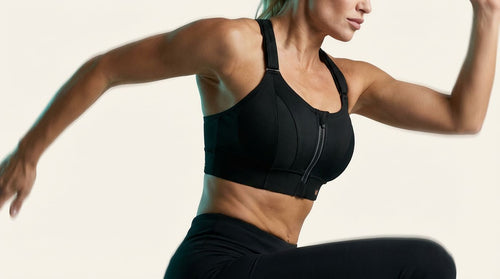
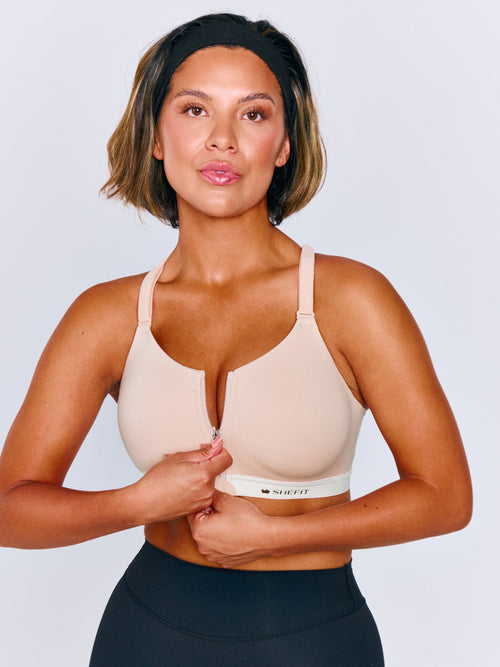
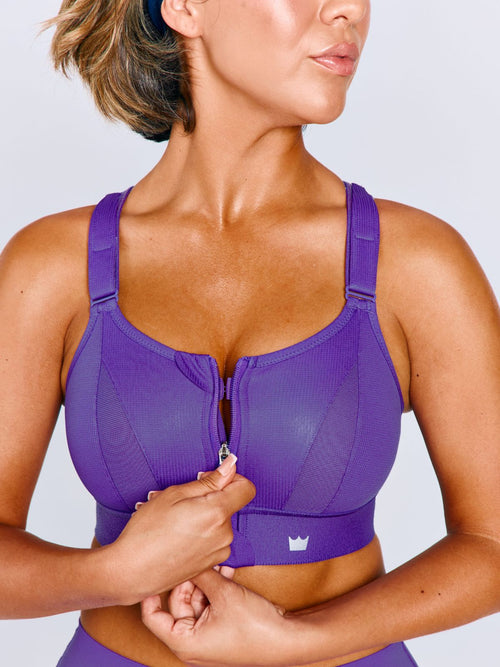
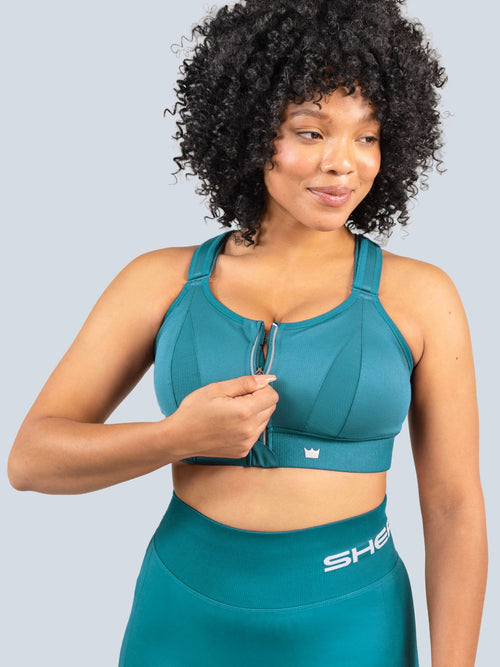
Our Ultimate Sports Bra and Flex Sports Bra both take the hybrid route, using encapsulation and compression together rather than leaning on one alone. Beyond the support mechanism, the real thing is built from breathable, moisture-wicking fabrics that move sweat away instead of trapping heat, and it uses non-stretch shoulder straps that adjust for a secure, personalized lift instead of stretching out under load. Those are the details that decide whether a bra still controls movement on mile five, well beyond how it feels in the fitting room.
Bralette vs Sports Bra: Key Differences at a Glance
Here is the head-to-head, feature by feature.
|
Feature |
Bralette |
Sports Bra |
|---|---|---|
|
Support level |
Light |
Medium to high |
|
Construction |
Soft, lightly structured, wire-free |
Engineered with compression and/or encapsulation |
|
Padding |
Minimal or none |
Removable modesty pads or smooth cups |
|
Fabric / moisture |
Soft fabrics like cotton and lace, not sweat-managing |
Breathable and moisture-wicking, reduces friction |
|
Movement control |
Not engineered to limit breast motion |
Built specifically to minimize breast motion |
|
Best for (activity) |
All-day wear and lounging, plus layering and sleep |
Workouts, from yoga to high-impact training |
|
Best for (cup size) |
Smaller cups, casual wear |
All sizes, especially D and above during activity |
|
All-day wearability |
Excellent |
Varies; compressive designs are built for activity, not 12-hour days |
The table makes the real lesson easy to miss, so we will say it plainly: the right choice depends less on how the bra looks and more on what you are asking it to do. Both styles can feel great while you are standing still. Only one of them is designed for what happens when you start moving.
When a Bralette Works (and When It Doesn't)
Let us be clear up front, because we are not anti-bralette. A bralette is the right tool for a real list of situations: all-day casual wear and lounging at home, layering under clothing or sleeping, and very gentle movement like slow stretching, seated meditation, or a short and easy walk. For comfort-first moments with little to no impact, it is exactly what you want.
The honest limits show up the moment movement enters the picture. Bralettes are not designed to minimize breast motion. They lack the structural engineering, the moisture management, and the secure straps that keep the chest stable during movement. For women with larger cup sizes, wearing a bralette as an everyday bra puts most of the breast weight on the straps, which can lead to shoulder strain and back discomfort over a long day.
The most common misconception we hear is that a cute lace bralette is "fine" for yoga or a light workout. It usually is not, for two reasons. Traditional fashion bralettes are made from delicate fabrics like lace, not the moisture-wicking material a workout requires, so they hold sweat and friction instead of managing them. And even low-impact exercise creates far more breast motion than sitting still does. A garment that feels supportive enough on the couch can leave you unsupported the second you move with intent. Sports bras substantially reduce breast motion in a way bralettes are not built to. So the bralette is not the enemy here. It is just being asked to do a job it was never designed for.
When a Sports Bra Is Non-Negotiable
The simplest way to know whether you need one is to match the bra to the impact level of what you are doing.
-
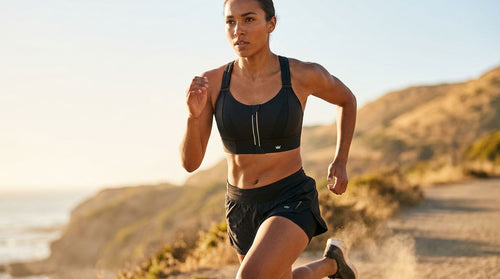
High-impact (running and HIIT, plus jumping, horseback riding, and CrossFit): Always required. There is no comfortable substitute.
-
Medium-impact (cycling and hiking, pickleball, the elliptical): Strongly recommended. The motion is real even if your feet are not leaving the ground.
-
Low-impact (yoga and walking, plus strength training): Still recommended; a workout bralette made from performance fabric is the absolute minimum, not the ideal.
Cup size shifts that math. Women with larger cup sizes experience more breast displacement at every activity level, which means a structured sports bra becomes the right call even for low-impact workouts. Bra expert Jené Luciani Sena, author of The Bra Book, notes that if you are over a C cup, some bralettes may not feel as supportive as they would for someone with smaller breasts [2]. The bigger the bust, the smaller the margin for "this will probably be fine."
This is also where the research gets interesting, because the case for proper support goes well beyond comfort. Studies from the University of Memphis Breast Biomechanics Research Center found that greater breast support alters trunk and knee joint biomechanics, with lower levels of support associated with movement patterns linked to higher ACL injury risk, including greater knee valgus angles [1]. Greater breast support has also been associated with reduced oxygen consumption and improved running economy, meaning your body works more efficiently when your chest is properly supported [3]. A separate study tied increasing breast support to altered knee joint stiffness during running, which researchers suggest may underlie those running-economy improvements [4].
None of that is meant to scare you. The point is the opposite: with the right support, your body moves better, performs better, and feels better. When you are ready to shop, you can browse our sports bras by impact level and find one matched to how you actually train.
The Size Factor: Why Fit Matters More Than Type
Here is the part most articles skip entirely, and it is the part that matters most. Before you agonize over bralette versus sports bra, there is a bigger question hiding underneath: is your bra the right size at all? Research shows the majority of women are wearing the wrong bra size, and most have simply gotten used to it. If the bra does not fit, the category on the label barely matters.
This is the problem we designed around. A SHEFIT bra uses non-stretch shoulder straps and an adjustable rib band, so you dial in the fit to your body instead of hoping a fixed size happens to match. The band does most of the work here; in any bra, the band accounts for the majority of support, which is why an adjustable one changes the equation. Our size range runs XS through 6Luxe (SHEFIT's sizing for extended sizes), spanning A-I cups, designed for all breast types, small to large, enhanced or natural.
How to tell if your bra actually fits
A bra that fits should disappear once it is on. If yours announces itself, one of these is usually the reason:
-
Band rides up the back: the band is too loose and cannot anchor against your ribcage during impact, which is where most of your support is supposed to come from.
-
Straps slide off or dig in: loose straps mean the size is too large; straps that pinch hard mean it is too small or the band is not carrying enough of the load.
-
Gapping between the cup and the breast: the cup is too large and the bra is not making full contact.
-
Breast tissue spills over the top or sides: the cup is too small, and you cannot fully scoop the breasts into the cups.
-
Visible armpit skin when the bra lifts properly: this one is not a problem. It is your natural underarm anatomy being exposed by the bra doing its job, not spillage and not a sign of the wrong size.
That last point causes more confusion than any other. Proper lift exposes a little natural skin near the underarm; spillage is breast tissue pushing over the top or sides of the cup; and a bra riding up into the armpit and chafing means it is too big. All three look similar at a glance, so it helps to know which one you are actually seeing before you assume something is wrong.
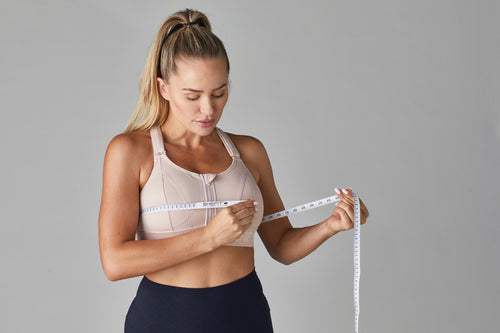
If you land between two sizes, the rule is simple: go larger for more coverage, smaller for more control. And if you are not sure where you fall, you do not have to guess. The free 30-second Fit Advisor quiz on our site gives you a personalized starting point, and our sizing guide walks through measuring yourself if you want full control over the process.
SHEFIT Sports Bras: Built for Every Body
Once you have decided proper support makes the most sense, the next question is which bra. We make two that cover most needs, and the choice comes down to how hard you train and the feel you prefer.
|
Bra |
Price |
Impact |
Cups |
Tested for |
|---|---|---|---|---|
|
$69 |
High-impact |
A-I, removable modesty pads |
Horseback riding |
|
|
$65 |
Medium-impact |
A-I, smooth cups |
Pickleball |
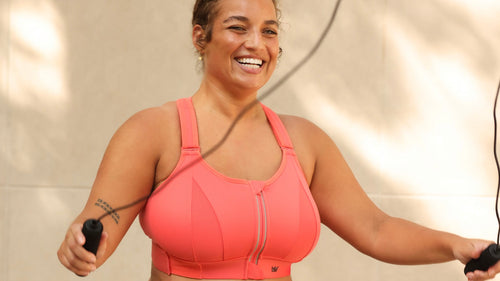
The Ultimate is our flagship high-impact bra. It pairs encapsulation and compression with non-stretch shoulder straps and an adjustable rib band, so it locks down movement during running and HIIT, CrossFit, and yes, horseback riding, one of the most demanding tests of bounce control there is. If you do high-impact training or carry a larger bust, this is the one we point you to first.
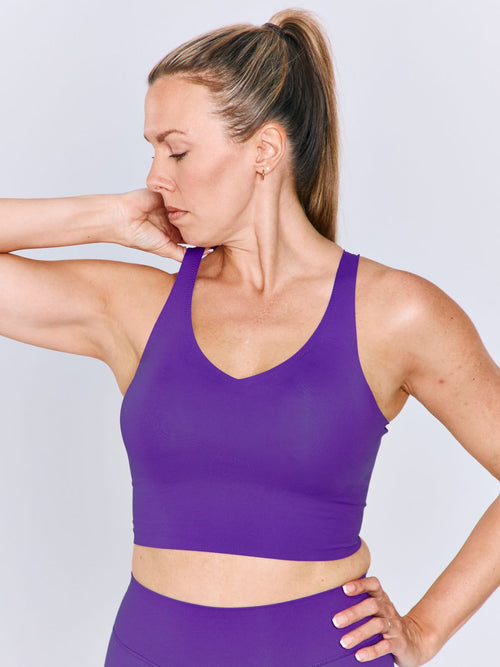
The Flex uses the same adjustable, hybrid approach with smooth cups and a lighter overall feel. It delivers medium-impact support across the size range, and even that medium-impact rating rivals what other brands call high-impact, which makes it a strong match for pickleball and cycling, strength training, and varied-intensity days. Readers who love the easy feel of a bralette but want real support tend to gravitate here.
Both bras are built to hold their shape and support wash after wash, and both are backed by more than 75,000 five-star reviews. Every order is covered by our Happiness Promise: 30-day returns and free exchanges, so finding your size carries no real risk. And every purchase feeds something bigger. Through the Sports Bra Project, we have donated more than $1.2 million in bras to women who need them, because we believe support should not be a luxury.
FAQs
Can I wear a bralette to the gym? For very light, low-movement activity it can work in a pinch, but we do not recommend it as your go-to. Bralettes are not built to control breast motion or wick sweat, so even a moderate workout will leave you under-supported. A performance-fabric option will serve you far better for anything beyond gentle stretching.
Is a bralette the same as a sports bra? No. They can look similar, but a bralette prioritizes comfort and everyday wear, while the sports bra is engineered specifically to minimize breast movement during exercise. The difference lives in the construction, the fabric, and the support, well beyond the styling.
Can I wear a sports bra as a bralette all day? You can, though it depends on the design. Highly compressive sports bras are built for activity, not 12-hour wear, and can feel restrictive over a full day. Our adjustable bras are more forgiving here because you can loosen the band for all-day comfort and cinch it back down to train.
Are bralettes good for large breasts? Generally not as an everyday or workout solution. Larger busts need more support than a bralette provides, and relying on one all day shifts weight onto the straps, which can cause shoulder and back strain. For D-cup and above, we recommend an adjustable, structured bra for both everyday wear and exercise.
What's the difference between compression and encapsulation sports bras? Compression presses both breasts against the chest wall to limit overall movement, while encapsulation surrounds each breast in its own supportive space to control motion individually and prevent friction. Hybrid bras, like ours, use both at once for the most complete support across activities and sizes.
Conclusion
Bralettes and sports bras share a wire-free, comfortable surface, but they answer different questions. A bralette is the right tool for comfort, layering, and low-movement days, and it is genuinely good at that. The sports bra is what you reach for when movement enters the picture, because it is built to control motion, manage sweat, and keep your body working efficiently, with research backing every part of that. The deeper truth underneath both is fit: the right size, dialed in to your body, matters more than the label on the tag. Get that right, match the garment to what you are actually doing, and you will never have to wonder mid-workout whether your bra is doing its job.
References
[1] Fong, H.B., Nelson, A.K., Storey, J.E., et al. "Greater Breast Support Alters Trunk and Knee Joint Biomechanics Commonly Associated With Anterior Cruciate Ligament Injury." Frontiers in Sports and Active Living, 2022. https://doi.org/10.3389/fspor.2022.861553
[2] Gould, Wendy Rose. "Bra vs. Bralette: What's the Difference?" Real Simple, March 19, 2026. https://www.realsimple.com/bralette-vs-bra-7092453
[3] Fong, H.B., Powell, D.W. "Greater Breast Support Is Associated With Reduced Oxygen Consumption and Greater Running Economy During a Treadmill Running Task." Frontiers in Sports and Active Living, 2022. https://www.breastbiomechanics.science/manuscripts
[4] Powell, D.W., Fong, H.B., Nelson, A.K. "Increasing breast support is associated with altered knee joint stiffness and contributing knee joint biomechanics during treadmill running." Frontiers in Sports and Active Living, 2023. https://doi.org/10.3389/fspor.2023.1113952