Which Bra Is Right for You? Learn More


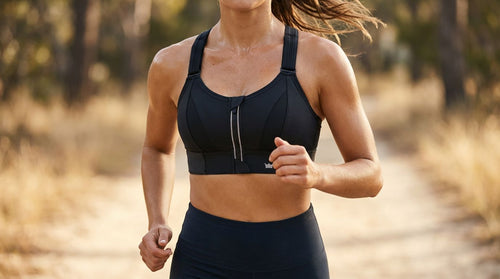
You've tried on sports bras that technically come in your size but dig into your shoulders, ride up during runs, or leave you adjusting every five minutes. You've abandoned workouts early because bouncing made them unbearable. You've wondered if high-impact exercise just isn't meant for your body.
It is. The gear was the problem.
Finding activewear that actually works across all body types used to mean endless trial and error. But the options have expanded dramatically, and knowing what to look for changes everything. This guide covers how to identify genuinely size-inclusive brands, what features matter most for different activities, and how to find pieces that let you focus on your workout instead of your wardrobe.
What "Size-Inclusive" Actually Means (And Why It Matters to You)
Not all extended sizing is created equal. Many brands take their size small design, test it on similar bodies, then scale patterns up and down. The result: a 4X that's essentially a stretched small with the same strap placement, band ratios, and performance limitations. It exists in your size. It doesn't work for your size.
Genuinely size-inclusive brands design differently. A 32A and a 42G need completely different support structures. Weight distribution, anchor points, and fabric behavior change dramatically across the size spectrum. When brands account for these differences from the start, you get gear that performs consistently whether you're a small or a 4X.
What to look for:
- Proportional construction - Larger sizes should have wider straps and reinforced stitching, not just more fabric
- Cup-size options - Band size and cup size are independent measurements. Brands that only offer S/M/L/XL are guessing at your fit
- Performance claims that apply to all sizes - Bounce reduction tested only on smaller bodies signals incomplete engineering
Why Your Options Have Improved
If you've shopped for extended-size activewear recently, you've probably noticed more choices than five years ago. A few factors explain why:
Online shopping changed the game. Local stores stock limited sizes. Online retailers can offer full size ranges without shelf space constraints. More than half of women now purchase sports bras online,[1] which means brands finally see demand data across all sizes, not just what fits in suburban mall inventory.
Fit testing evolved. Better brands now use diverse fit models during development rather than scaling a single template. This solves the proportion problems that made early extended sizing feel like an afterthought.
You demanded better. Women stopped accepting "good enough" when brands proved genuinely good options were possible. The feedback loop between customer expectations and product development has tightened considerably.
Comparing Size-Inclusive Brands
Different brands take different approaches. Here's how some popular options stack up for what matters most: size range, adjustability, and what activities they're actually designed for.
| Brand | Size Range | Adjustability | Best For |
|---|---|---|---|
| SHEFIT | XS-6Luxe, AA-I cups | Adjustable straps + band | High-impact, customizable fit |
| Juno Active | Sizes 12-32 | Limited (pull-on) | Low-impact, anti-chafing priority |
| Lane Bryant LIVI | Sizes 14-32 | Hook closures | Budget-friendly everyday wear |
| Girlfriend Collective | XS-6XL | Standard adjustable straps | Eco-conscious, medium support |
SHEFIT: Built Around Adjustability
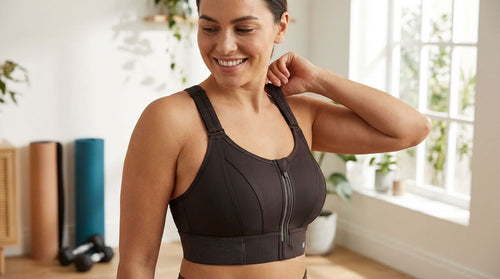
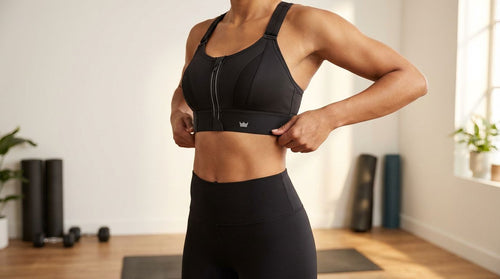
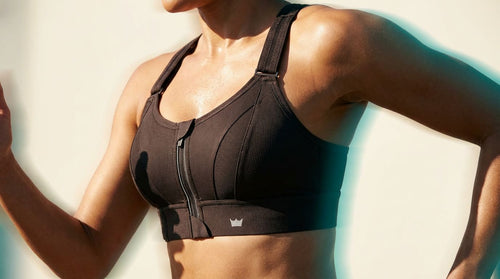
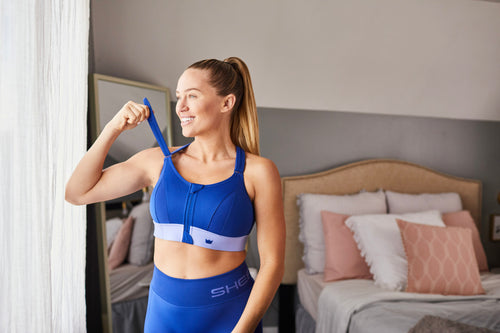
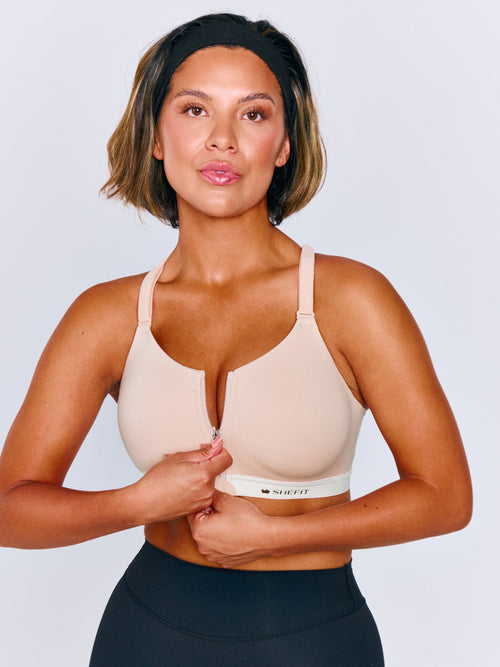
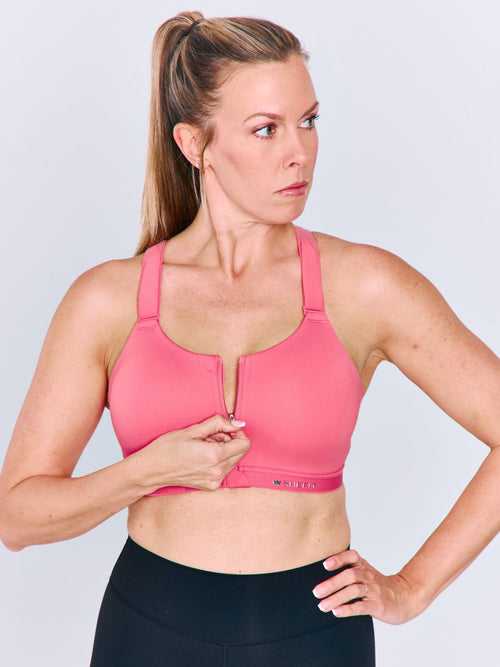
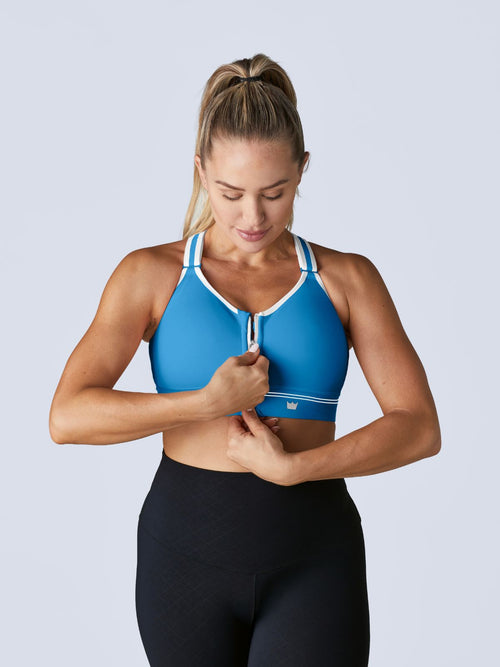
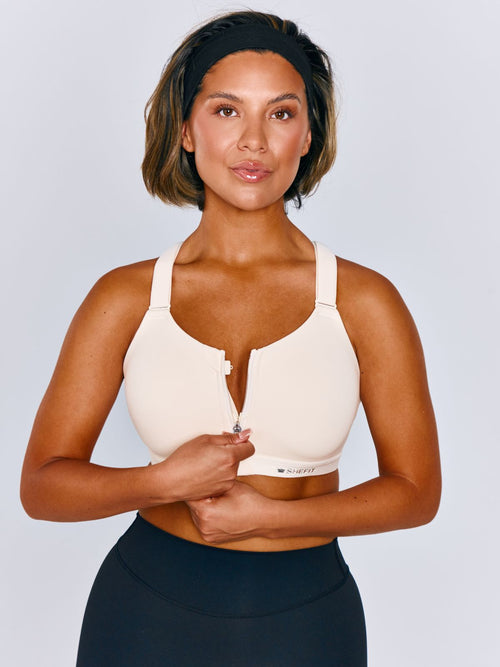
We designed SHEFIT specifically to solve the "close enough" problem. Our Ultimate Sports Bra lets you dial in your exact fit with adjustable shoulder straps and rib band, both patented because no one else was doing it. Sizes run XS-6Luxe with cup sizes from AA to I.
Why adjustability matters: Bodies fluctuate. Weight changes, hormonal shifts, and even time of day affect how a bra fits. Static sizing forces you to pick one setting. Adjustable design lets you fine-tune support based on how you feel that day and what activity you're doing.
University of Memphis research found our Ultimate Sports Bra reduces breast motion by more than 50% during high-impact movements. Independent testing validates the support claims.
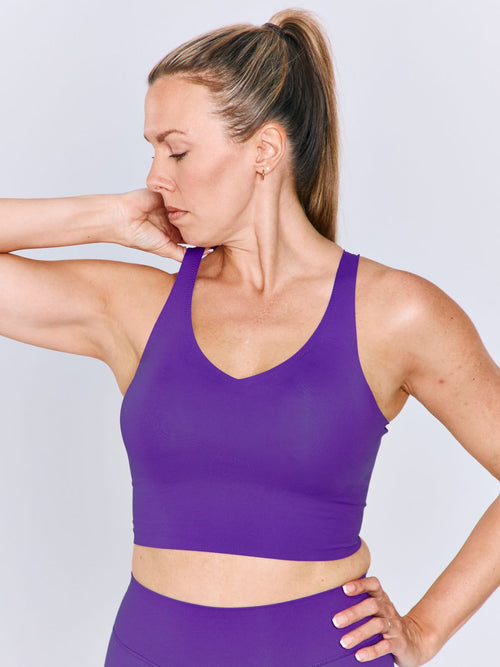
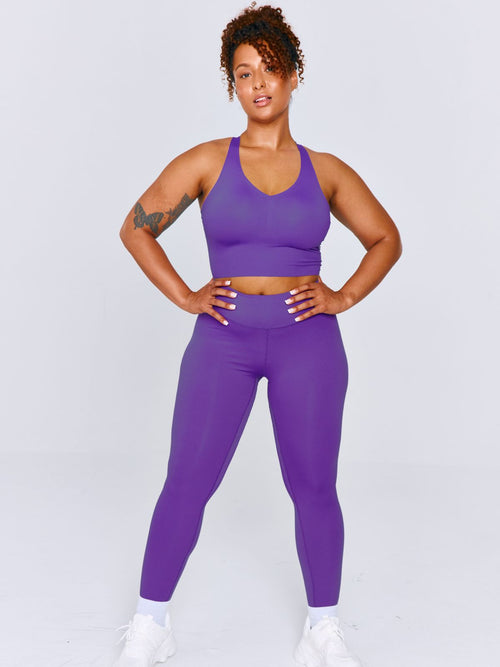
The Flex Sports Bra takes a different approach with smooth cups for a sculpted look, offering high-impact support for smaller busts (32C and under) and medium-impact for larger sizes. It works well for strength training, cycling, yoga, and pickleball.
How to Evaluate Any Brand
When comparing options, check these factors:
- Cup size availability - Generic S/M/L/XL sizing ignores that band and cup are independent measurements
- Marketing diversity - Token representation at the edges of their size range suggests afterthought design
- Specific performance claims - Vague language about support often means testing stopped at medium sizes
- Sizing support - Quality brands offer fit guidance beyond generic charts
Features That Actually Matter
Technical specs sound impressive. Here's how to translate feature lists into real-world performance.
Compression vs. Encapsulation (And Why You Want Both)
Compression presses breasts against your chest wall to minimize movement. Think classic sports bras that flatten everything down.
Encapsulation separates each breast into its own cup space, supporting them individually.
Neither alone is ideal for high-impact activity. Compression without encapsulation squishes everything together, which is uncomfortable and still bouncy. Encapsulation without compression gives shape but limited control. The best high-impact bras combine both: individual cup structure plus compressive support.
What Adjustable Features Fix
| Feature | What It Solves |
|---|---|
| Non-stretch shoulder straps | Eliminates slippage and digging because stretchy straps lose tension during movement |
| Adjustable rib band | Accommodates breathing, bloating, and fluctuations without changing bra sizes |
| Multiple closure positions | Extends bra lifespan as elastic relaxes over time |
| Removable padding | Lets you choose coverage level based on outfit or preference |
Construction Details Worth Checking
Strap width should increase with cup size. Thin straps on a DD+ bra concentrate weight on a small area, causing shoulder pain. Wider straps distribute load.
Seam placement matters for chafing. Seams running across nipple lines or under arms cause friction during repetitive movement. Strategic placement keeps them away from high-rub zones.
Reinforced stitching at stress points (strap connections, band closures, seam junctions) prevents the premature failure common in cheaper extended-size options. Double or triple stitching at these points means the bra holds up through months of use.
What Changes When Your Gear Actually Works
The right sports bra doesn't just reduce bounce. It removes a barrier you might not realize was limiting you.
Activities That Become Possible
Women who find proper support often describe trying things they'd written off:
- Running - Not speed-walking-to-avoid-bouncing, but actual running. Training for 5Ks. Eventually marathons.
- HIIT and CrossFit - Box jumps, burpees, and jumping jacks without one arm crossed over your chest
- Group fitness classes - Showing up without strategically positioning yourself in the back corner
- Horseback riding - An impact sport people forget about until they try it without support
The physical change enables psychological ones. When you stop managing your equipment mid-workout, you can actually focus on the workout.
The Confidence Factor
This sounds abstract until you've experienced both sides. Worrying about a wardrobe malfunction during a run occupies mental bandwidth. Constantly adjusting straps breaks your flow. Declining activities because you know your bra won't hold up limits what fitness means to you.
Remove those concerns, and options expand. Research confirms inadequate breast support discourages women from exercising due to discomfort and embarrassment.[2] The barrier is real, and so is its removal.
For guidance on finding the right fit for larger cup sizes, this breakdown of sports bras for large cups covers what to prioritize and what to avoid.
How to Find Your Fit
Getting sized correctly takes five minutes and saves hours of returns.
Measuring Yourself
Band size: Wrap a soft tape measure directly under your bust, parallel to the floor. Pull snug but not tight. Round to the nearest even number.
Cup size: Measure around the fullest part of your bust at nipple level. Keep tape parallel and relaxed. Subtract band measurement from bust measurement. Each inch equals one cup size (1"=A, 2"=B, 3"=C, etc.).
Common mistakes:
- Measuring over a padded bra (measure bare skin or thin, unpadded bra)
- Holding tape too loosely, which understates band size
- Using measurements from years ago (bodies change)
Use brand-specific size charts rather than assuming your size translates. A medium from one brand won't match another's medium.
The Fit Check
Before you commit, test these:
- Band position - Should sit horizontal across your back, not riding up
- Strap tension - Provides lift without digging into shoulders
- Cup coverage - No spillage over edges or gaping at the top
- The jump test - Bounce during vertical movement means inadequate support
Matching Support to Activity
Not every workout demands the same level of support. A yoga flow puts different stress on your body than a trail run. Matching your bra to your activity prevents both over-engineering for low-impact days and under-supporting when it matters most.
| Impact Level | Activities | What You Need |
|---|---|---|
| High-impact | Running, HIIT, CrossFit, horseback riding | Encapsulation + compression, non-stretch straps, adjustable band |
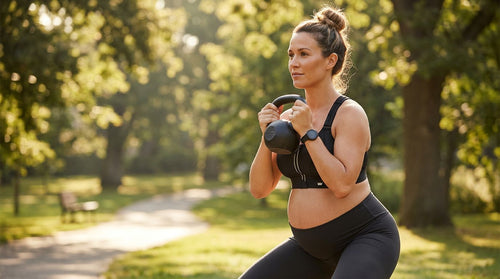
| Medium-impact | Cycling, strength training, pickleball | Moderate compression, some adjustability |
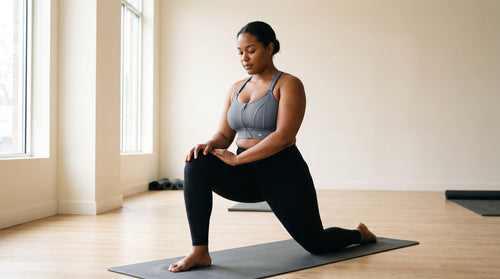
| Low-impact | Yoga, Pilates, walking | Comfort-focused, range of motion priority |
Your cup size shifts these requirements. Smaller busts have flexibility, and medium support might handle high-impact activities fine. Larger busts typically need high-impact features across most activity types.
A customizable sports bra lets you match support level to your day rather than picking one setting that compromises somewhere.
FAQs
How do I know if my sports bra actually fits?
Do the jump test. Jump up and down, do some high knees. If you're bouncing or holding yourself, support is inadequate. A properly fitting bra should also sit horizontal across your back (not riding up), provide lift without shoulder digging, and show no spillage over cup edges.
Why do some brands only offer S/M/L/XL while others offer cup sizes?
S/M/L sizing assumes a standard cup-to-band ratio that doesn't exist in real bodies. A woman wearing size large might be a 36C or a 32DD, which require completely different support. Brands offering cup sizes acknowledge that band and bust are independent measurements requiring independent solutions.
My sports bra fit great when I bought it but now rides up. What happened?
Elastic degrades with wear and washing. Most sports bras lose significant support after 6-12 months of regular use. If you're adjusting to tighter hook settings and still not getting support, it's time to replace. Air drying (no dryer) extends lifespan considerably.
Do I need different bras for different workouts?
It depends on your cup size. Smaller busts can often use a medium-support bra across activities. Larger busts typically need high-impact support even for activities you wouldn't think of as intense. The physics of weight distribution don't change based on workout type.
What's the point of adjustable straps if the bra should fit when I buy it?
Bodies fluctuate. Weight changes, hormonal shifts, time of day, and even hydration affect how a bra fits. Adjustable straps and bands let you dial in support for how you feel today rather than forcing one static fit. They also compensate as elastic relaxes over time.
Is more expensive always better?
Not automatically, but quality construction costs more. Extended sizes require more fabric, different pattern development, and reinforced stitching at stress points. Cheap extended-size bras often fail at the seams or lose compression quickly. Price doesn't guarantee quality, but suspiciously cheap usually signals cut corners.
References
[1] ShelfTrend. "Athleisure Sports Bra Market Analysis - Marketplace Opportunities 2025." 2025. https://www.shelftrend.com/sporting-goods/athleisure-sports-bra-market-analysis-marketplace-opportunities-2025
[2] Scurr, J., Brown, N., et al. "The Influence of the Breast on Physical Activity Participation in Females." Journal of Adolescent Health. 2016. https://pubmed.ncbi.nlm.nih.gov/24905581/