Which Bra Is Right for You? Learn More


The wire is the part everyone points to. It is rigid, you can feel it under the fabric, and it sits right where the support seems to be happening, so it gets the credit. Ask most women what makes a bra supportive and the wire comes up before the band does.
That instinct is understandable and it is mostly wrong. The parts actually doing the work are the ones you cannot see when the bra is on a hanger: the band around your ribs, the tension in the straps, the way the cups are built, and how the fabric behaves under load. A wire can contribute to that system. It has never been the system.
At SHEFIT, that distinction is not academic for us. Every sports bra we currently make is wire-free by construction, and they run from all-day comfort up to the highest-impact training we build for. So the question in the title is one we have had to answer honestly rather than conveniently, and the answer has more nuance than either camp usually allows.
What follows is what construction actually determines, when a wire genuinely earns its place, and how to test whether the bra you own is supporting you regardless of what is or is not sewn into the cups.
What Actually Makes a Sports Bra Wireless
It is worth being precise about the term first, because it is used loosely enough that two products labeled the same way can be built completely differently.
Wire-free means exactly one thing: no metal or rigid plastic boning sewn into the underside of the cups. That is the whole definition. It says nothing about how much support the bra provides, which is why "wireless" and "low support" get treated as synonyms when they are not related.
The conflation has a history behind it. Underwire arrived in everyday lingerie long before sports bras were a category, so by the time athletic bras existed, wires were already shorthand for structure. Early wire-free sports bras were mostly soft pullover styles built for low-impact use, which locked in the association for another generation. The construction has moved on considerably since. The vocabulary has not.
With no wire in the picture, support has to come from somewhere else, and it comes from four places working together. The band anchors the bra to your ribcage. The straps set lift and resist vertical movement. The cup construction either separates and holds each breast or presses breast tissue toward the chest wall. And the fabric itself either holds its shape under load or gives way.
Sports Medicine Australia sorts sports bras into three design types by how those elements combine [1]:
- Encapsulation designs give each breast its own cup and support it individually, closer to how an everyday bra is built.
- Crop top or compression designs pull over the head and work by pressing breast tissue against the chest wall.
- Hybrid or combination designs do both, encapsulating each breast and compressing at the same time.
Any of the three can be built without a wire. For encapsulation designs specifically, that same fact sheet treats underwire as a matter of personal preference rather than a structural requirement. That is a professional sports medicine body, not a brand with a wire-free catalog to defend, and it is the clearest statement available that the wire is optional equipment.
There is a scale question underneath all of this that makes the stakes concrete. During one hour of running, breasts can bounce roughly 10,000 times [1]. Something has to manage that, and the question worth asking is which parts of the bra are doing it.
The Real Reason Sports Bras Support You
Start with the band, because it does the most and gets the least attention. Depending on whose figure you use, the band accounts for roughly 80 to 90 percent of the support in any bra. It is the anchor. Everything else, including a wire, is working against that anchor or falling apart without it.
A band that has stretched out cannot be rescued by anything above it. This is why a bra can have a wire, a good strap system, and structured cups, and still fail during a workout: the whole assembly is only as stable as what is holding it to your ribs. It is also why the first thing worth checking on any bra, wired or not, is whether the band still grips.
There is a practical consequence to the band carrying that much of the load. An underband you can adjust independently of everything else lets you keep the support constant while your body changes across a cycle, a season, or a training block. A fixed band gives you one setting and asks you to live with it or replace the bra. In real use, that matters more than the presence or absence of a wire, and it is almost never the thing shoppers compare.
Straps come second and do a specific job. They set lift and resist the vertical component of movement. Whether they stretch matters more than most people expect. Ours are non-stretch by design, which means the lift you set is the lift you get through the workout and through the wash cycles after it, rather than tension that quietly gives up over months.
Then there is cup construction, which is where REI's fit guidance is useful because it lines the three types up against who they suit [2]:
| Construction | How it works | Best suited to |
|---|---|---|
| Encapsulation | Individual cups support each breast separately, no compression | Lower-impact activity, smaller cup sizes |
| Compression | Pullover design presses breast tissue toward the chest wall | Lower to moderate impact, a wide size range |
| Combination | Encapsulates and compresses at the same time | The most support; REI points to C-DD and above |
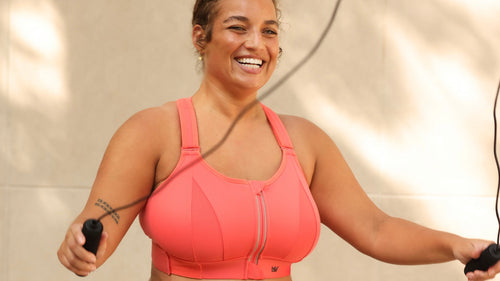
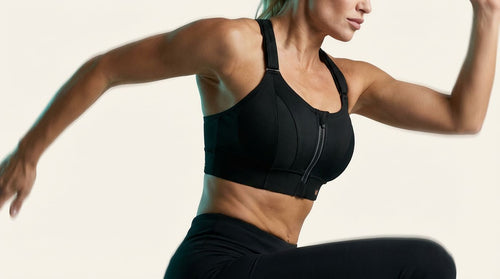
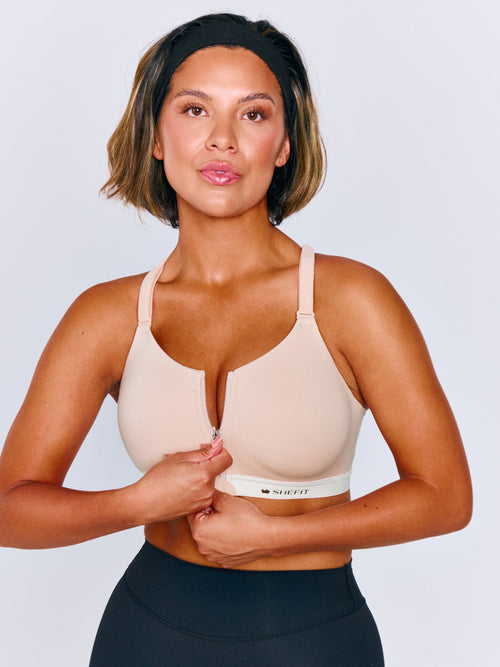
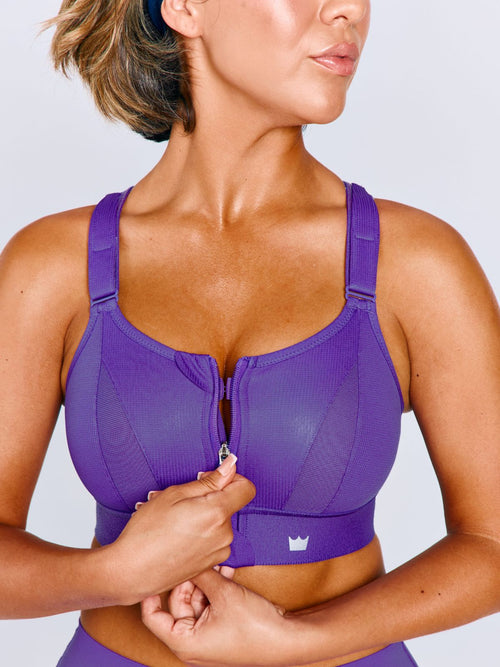
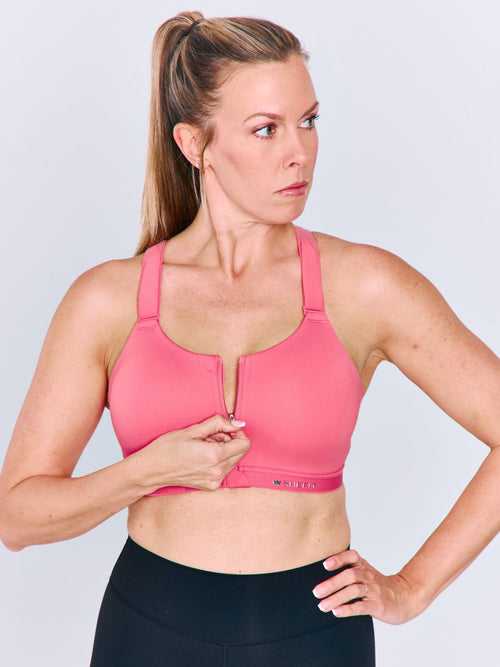
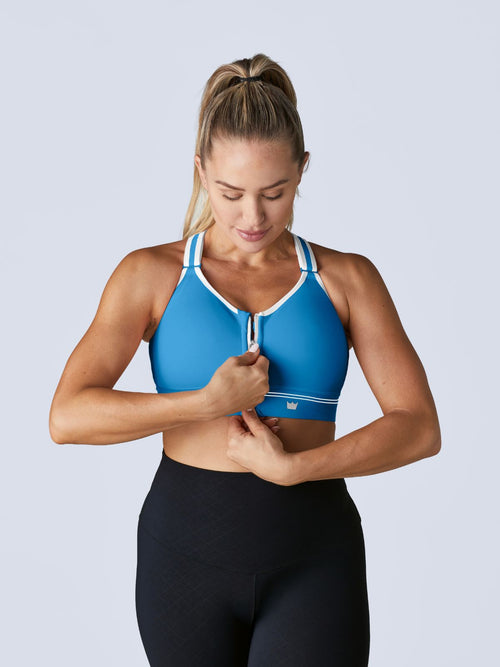
Our Ultimate Sports Bra and our Flex Sports Bra use encapsulation and compression together, which is the combination approach in that third row, built without a wire. Both the Ultimate and Flex Sports Bras handle that with a front zipper for access, a cinchable rib band that sets compression, and adjustable non-stretch shoulder straps that set lift. Three separate adjustments, none of them a wire.
Notably, REI's own section on underwire describes what a wire contributes without ever claiming it is required for high support [2]. The same pattern holds across neutral sources: the wire gets described as one option among several, and the support hierarchy gets built out of band, straps, and cup construction instead.
It is a pattern worth noticing because it inverts how the category is usually marketed. Product pages lead with the wire because it is a feature you can name in three words. Fit guidance leads with the band because that is what actually holds the bra in place. When those two sources disagree about what matters, the one without something to sell is the better guide.
The research on high support points the same direction. University of Memphis research shows that high-support sports bras are associated with biomechanics linked to lower ACL injury risk [3]. The consistent finding is not that wires do nothing. It is that the design around them determines the outcome.
When Underwire Actually Helps, and When It Doesn't
None of this makes underwire a mistake. There are situations where a wire is more often recommended and situations where going without one is the medically cautious choice, and both lists are worth knowing before you decide.
Underwire comes up more frequently for larger cup sizes, roughly DD and above, in high-impact or long-duration activity, where separating and containing each breast individually reduces the total load any one part of the bra has to manage. That is a recommendation about frequency, not a rule. Plenty of women in that range train comfortably wire-free, which is the entire premise of combination-style construction.
What a wire does well is hold a defined shape at the base of each cup, which keeps breast tissue where the cup expects it and stops the fabric from collapsing inward under load. The benefit is real and worth naming plainly. The same job can be done by a firm cup edge, a well-engineered underband, and encapsulation seams, which is how wire-free combination bras get to comparable support. Different mechanism, same objective.
The cases against a wire are more specific, and this is where the guidance gets firm rather than preferential. The Australian guidance advises against underwire for contact, collision, and combat sports, where a rigid wire is an injury risk on impact, and for breastfeeding, where pressure on milk ducts is the concern.
Beyond those two, several situations point toward wire-free by comfort or circumstance rather than by formal recommendation:
- Post-surgical recovery, where anything rigid sitting against the ribcage or incision site is unwelcome
- Pregnancy, when ribcage dimensions and breast tissue are both changing week to week
- Adolescents, whose sizing changes faster than a wire's fixed shape can follow
- Anyone who finds wires uncomfortable enough that they cut workouts short or skip them
That last one deserves more weight than it usually gets. A bra you avoid wearing provides no support at all, which makes comfort a performance variable, not a soft preference. The most supportive bra in a drawer is doing less than a moderately supportive one you actually put on.
Which SHEFIT Bra Fits Your Reason for Going Wireless
Here is the part that surprised us when we mapped it out: our entire current sports bra lineup is wire-free. Not as a category we carved out for the wire-averse, but as how we build. The range covers rest days through CrossFit with no boning anywhere in it.
| SHEFIT bra | Support level | Construction | Best for |
|---|---|---|---|
| Ultimate Sports Bra | High impact | Encapsulation and compression, patented adjustable rib band and non-stretch straps, no wire | Running, HIIT, CrossFit, horseback riding |
| Flex Sports Bra | Medium impact | Encapsulation and compression, adjustable rib band and non-stretch straps, smooth cups, no wire | Yoga, cycling, strength training, pickleball |
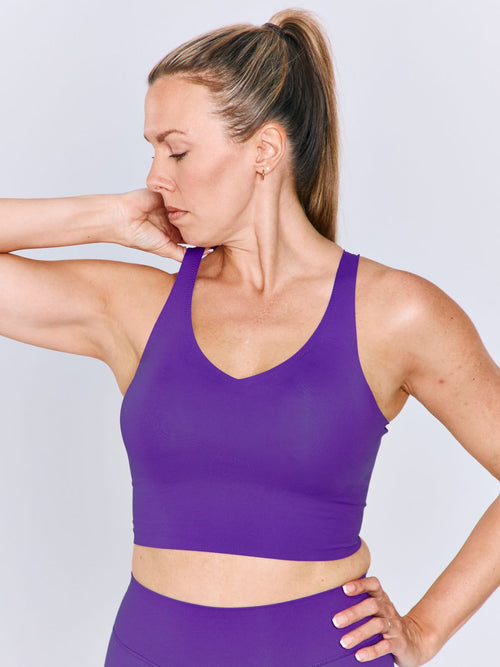
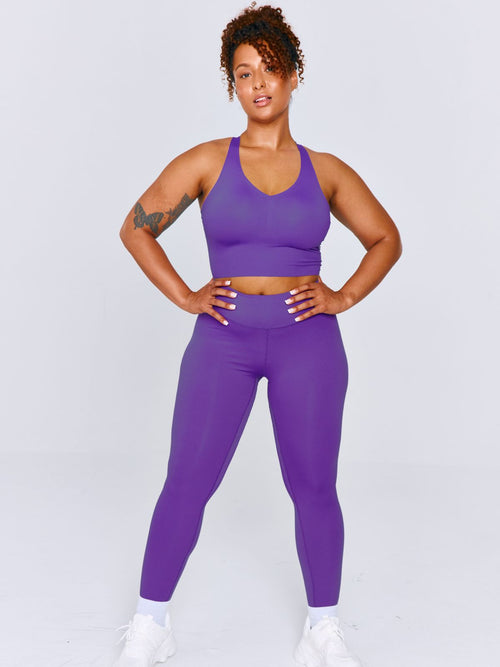
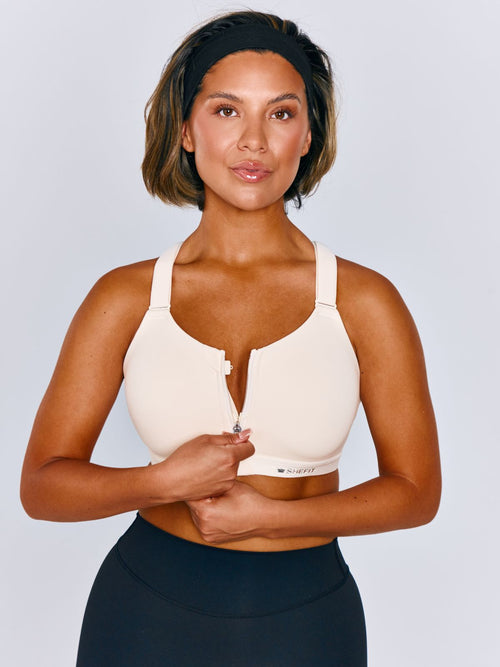
| Emerge Sports Bra | Medium support C+, high support AA-B | Wire-free lightly padded cups, AdaptiveFit technology | Studio classes, everyday wear, lighter training |
| Low Impact Sports Bra | Low impact | Wire-free seamless cups | Walking, yoga, Pilates, post-surgery |
| Lounge Bra | Minimal | Wire-free seamless cups | All-day wear, rest days, post-surgery |
Reading the table by impact level is the obvious approach, and it is not the one we would recommend first. Start with why you are looking at wire-free bras at all. Post-surgical comfort, breastfeeding, contact sport, or simple dislike of wires each point to a different row, and each has a different tolerance for how snug the band needs to sit.
The two ends of that range are worth calling out because they answer different versions of the same question. If you are leaving underwire behind but not leaving high-impact training behind, the Ultimate Sports Bra is the one built for that: three independent adjustments, and an adjustable rib band you can cinch as the day or the season changes.
At the other end, the Emerge™ Sports Bra is our newest line and the one that tends to fit readers arriving here from an underwire bra rather than from another sports bra. Wire-free lightly padded cups, AdaptiveFit construction, and a support profile aimed at medium support for C and above. If your reason for going wireless is comfort in an everyday context rather than impact management, that is where we would start you.
If you want the full side-by-side instead of a summary, our bra comparison page lays every option out against each other. And one note on sizing before you pick: we run XS through 6Luxe covering AA-I cups, and we would rather you measure in inches than translate a cup letter you were assigned years ago.
How to Tell If a Wireless Bra Is Actually Supporting You
Switching away from a wire changes what fit feels like, and the first week is where women most often conclude the bra is not supportive when what has actually happened is that the fit is off. Roughly 85 percent of women wear the wrong bra size [4], and a size that was wrong under a wire stays wrong without one.
The most useful test is one you run during the activity itself, not in front of a mirror. The Australian sports medicine standard is straightforward: breast discomfort should sit at zero on a ten-point scale, and breast movement should not exceed three or four, measured during the actual activity you do. That standard says nothing about wires, which is precisely why it works here. If a wire-free bra passes it during your workout, it is supporting you, and no structural argument overrides that result.
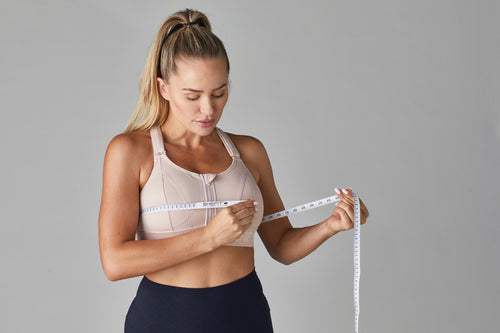
Before you get to the activity test, two checks take ten seconds. Run two fingers under the band; they should slide in with resistance and not much room to spare. Then slide a finger under each strap at the shoulder, which should sit flat without digging in or lifting away.
Run both checks with your arms down and then again with them overhead. One that stays put through that movement is anchored. A band that travels up your ribcage when you raise your arms will do the same thing during a set of overhead presses or the first mile of a run, and it will take the rest of the bra with it.
One thing to know before you start diagnosing: soft tissue near your armpit that the band gathers is normal anatomy, not spillage, and not a sign of the wrong size. Spillage is breast tissue escaping the cup at the top or side. They look similar in the mirror and they mean completely different things, and confusing the two is how women size up out of a bra that fit them correctly.
Everything else usually announces itself as a specific consequence, not a vague sense of wrongness:
| What you notice | What it means | What to do |
|---|---|---|
| Band rides up your back during the workout | The band is too loose to anchor and the straps are carrying the load | Cinch the band, or go down a band size |
| Straps dig grooves into your shoulders | The straps are doing the band's job | Loosen the straps first, then tighten the band |
| Bra rides up into your armpits and chafes | The bra is moving against your skin instead of staying put | Recheck the band fit before changing size |
| Breast tissue escapes over the top or the side of the cup | The cup is too small for the volume it is holding | Size up for coverage, keeping the band the same |
| Cups wrinkle or gap with empty space | The cup is larger than the volume it is holding | Size down for control |
| Noticeable bounce during activity despite a snug band | Support level mismatched to impact level | Move up an impact tier, not a size |
That last distinction matters most for anyone leaving a wire behind. When something feels wrong, the reflex is to change size, and the fix is more often to change the band setting or the impact tier. Between sizes, our own rule is simple: larger for coverage, smaller for control.
Wireless Sports Bra Questions, Answered
Does going wireless mean giving up high-impact training?
No. Support level is set by construction and fit, not by whether a wire is present. A wire-free bra using encapsulation and compression together, with an adjustable band and non-stretch straps, is built for high-impact use. The test that matters is how it performs during your actual activity.
Is a wireless sports bra as supportive as one with underwire?
It can be, and the deciding factor is construction rather than the wire. Support comes from the band, the straps, and whether the cups encapsulate, compress, or do both. Australia's sports medicine guidance treats underwire as personal preference for encapsulation designs, not as a support requirement.
Who should avoid underwire in a sports bra?
Sports medicine guidance advises against it for contact, collision, and combat sports because of injury risk on impact, and for breastfeeding because of pressure on milk ducts. Post-surgical recovery, pregnancy, and adolescence are also common reasons to go wire-free, as is straightforward discomfort.
What is the difference between a wireless and a compression-only sports bra?
Wireless describes what is absent: no wire in the cups. Compression describes how the bra works: it presses breast tissue toward the chest wall rather than cupping each breast separately. A compression bra is always wireless, but plenty of wireless bras use encapsulation or both approaches together.
How do I know my wireless sports bra fits correctly?
Test it during the activity, not standing still. Discomfort should sit at zero on a ten-point scale, and movement should stay at or below three or four while you are actually moving. Add the two-finger band check and confirm the band is not riding up your back mid-workout.
Where That Leaves Your Next Bra
The wire question turns out to be the wrong question, or at least a much smaller one than it appears. What determines whether a sports bra holds you is a band that anchors to your ribs, straps that hold their tension, cups built for your impact level, and a size that reflects your actual measurements rather than a letter you were given once. Get those right and the wire becomes a preference. Get them wrong and no wire will save the bra.
This is also why we would rather talk you through impact level and measurements than sell you on a construction term. A woman in a correctly sized medium-impact bra is better supported than the same woman in a high-impact bra two band sizes too loose, wire or no wire. Construction sets the ceiling. Fit determines how much of it you actually get.
Every bra we build starts from that premise, which is why the whole lineup is wire-free without us having made a campaign out of it. If you are ready to find yours, start with the impact level you actually train at and let the fit follow. Find your fit and go from there.
References
[1] Sports Medicine Australia. "Exercise and Breast Support." Sports Medicine Australia. https://sma.org.au/resources/injury-fact-sheets/exercise-and-breast-support/
[2] Paige Frederick-Pape. "Sports Bras: Sizing & Measuring." REI Co-op Expert Advice. https://www.rei.com/learn/expert-advice/sports-bras.html
[3] Fong, H.B., Nelson, A.K., Storey, J.E., Hinton, J., Puppa, M., McGhee, D., Greenwood, D., & Powell, D.W. "Greater Breast Support Alters Trunk and Knee Joint Biomechanics Commonly Associated With Anterior Cruciate Ligament Injury." Frontiers in Sports and Active Living, 2022. https://doi.org/10.3389/fspor.2022.861553
[4] McGhee, D.E., & Steele, J.R. "Optimising breast support in female patients through correct bra fit: a cross-sectional study." Journal of Science and Medicine in Sport, 2010. https://pubmed.ncbi.nlm.nih.gov/20451452/