Top Plus-Size Sports Bras for 2025 Workouts

Top Plus-Size Sports Bras for 2025 Workouts

    You're mid-burpee when it happens again. The band rides up. The straps slip. You're adjusting instead of moving.

    Many plus-size women struggle to find bras that deliver genuine support without compromise. Brands are finally recognizing that supporting fuller chests requires different engineering, not just larger sizes.

    The problem isn't your body. Most sports bras are designed with a one-size-fits-most mentality that relies on compression alone. You need encapsulation for individual breast support, adjustability for custom fit, and construction designed specifically for the biomechanics of larger busts.

    In 2026, better options exist. Let's find yours.

    What Makes a Great Plus-Size Sports Bra

    A quality plus-size sports bra needs to do more than just stretch to fit. It requires thoughtful engineering to provide real support during movement. The difference between a bra that works and one that leaves you adjusting mid-workout comes down to specific features that address the biomechanics of supporting a fuller bust.

    Key Engineering Features Explained:

    Feature

    What It Does

    Why Plus-Size Women Need It

    Encapsulation Design

    Creates separate supportive pockets for each breast

    Prevents breast-to-breast friction and lateral movement during activity

    Compression Support

    Minimizes overall tissue movement against chest wall

    Controls bounce in all directions without relying solely on tightness

    Adjustable Straps & Band

    Customizes fit to your exact body shape

    Adapts to hormonal changes, weight fluctuations, and body variations

    Non-Stretch Construction

    Maintains secure lift over time

    Prevents gradual loosening that forces constant readjustment

    Think of encapsulation as the structure and compression as the control. Together, these features provide the level of support that plus-size women need without relying solely on tightness, which can restrict breathing and create discomfort.

    Why These Features Matter:

    Research shows that 80% of women wear incorrectly sized bras [1]. This means most women are working out in inadequate support. The right bra needs:

    Adjustability → Your body changes throughout the month, over time, and through major life events. Adjustable straps and bands let one bra adapt instead of requiring constant replacements. Non-stretch straps maintain their lift without loosening over time.

    True size inclusivity → Many brands scale up designs created for smaller busts. This fails because larger breasts need different support structures, not just more fabric. Look for brands that engineer specifically for fuller busts with wider bands, reinforced underbands, and proper cup shapes.

    Custom fit → Chafing comes from movement, when your bra shifts and rubs against your skin during activity. A properly fitted bra stays in position, moving with your body rather than sliding against it.

    Top Sports Bras for Plus-Size Women

    More options exist than ever for women who need serious support, but a few standout products deliver the engineering and adjustability that plus-size women actually need.

    SHEFIT Ultimate Sports Bra Quick Reference:

    • Size range: XS-6Luxe with AA-I cup options

    • Price: $74

    • Best for: High-impact activities like running, HIIT, and horseback riding

    • Key tech: Patented adjustable straps + rib band, non-stretch construction

    • Durability: Wash-tested to 25 cycles (12-24+ month lifespan)

    • Research-backed: 50%+ breast motion reduction (University of Memphis)

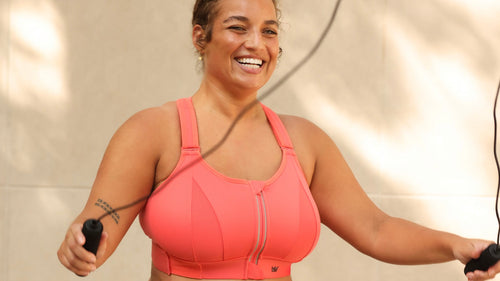
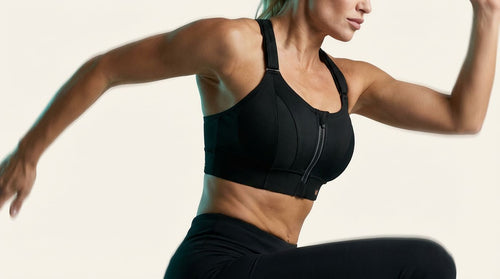
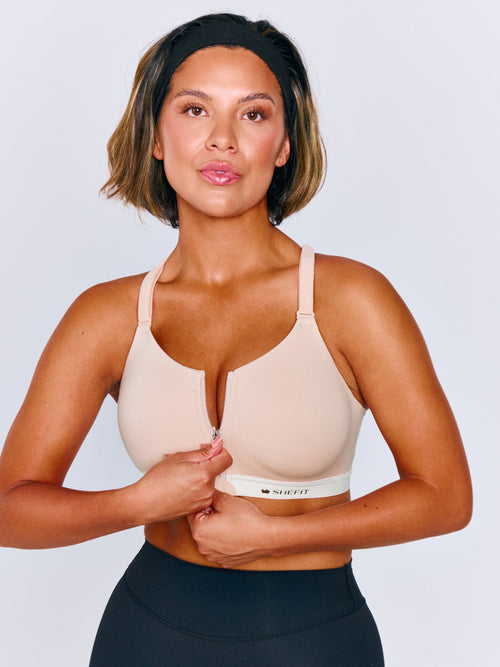
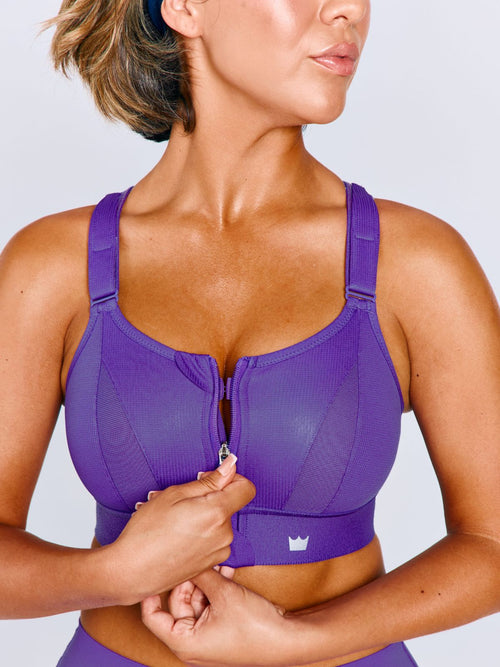
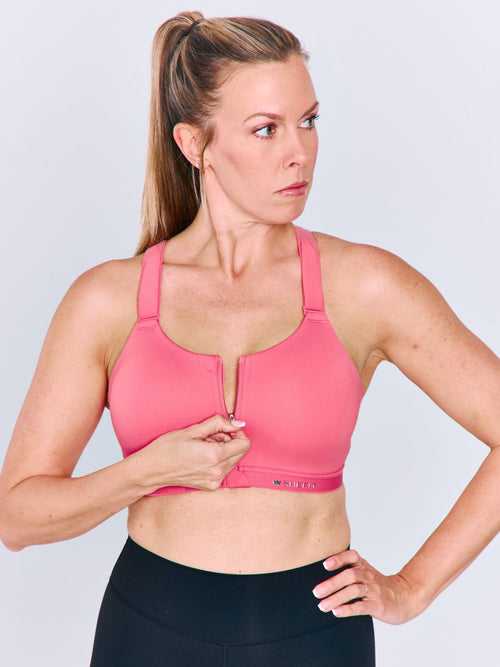
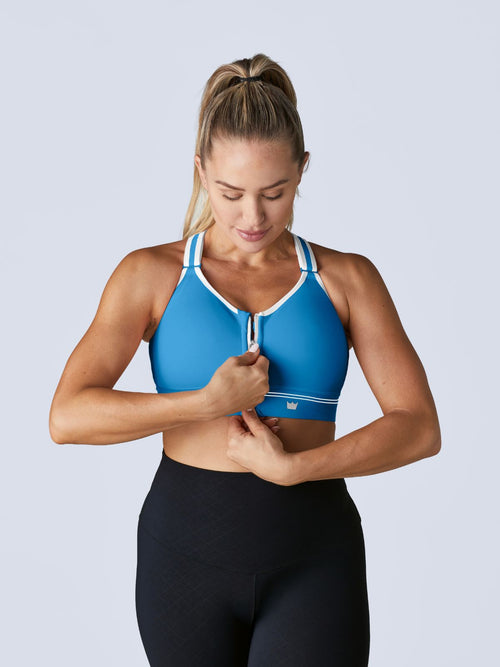
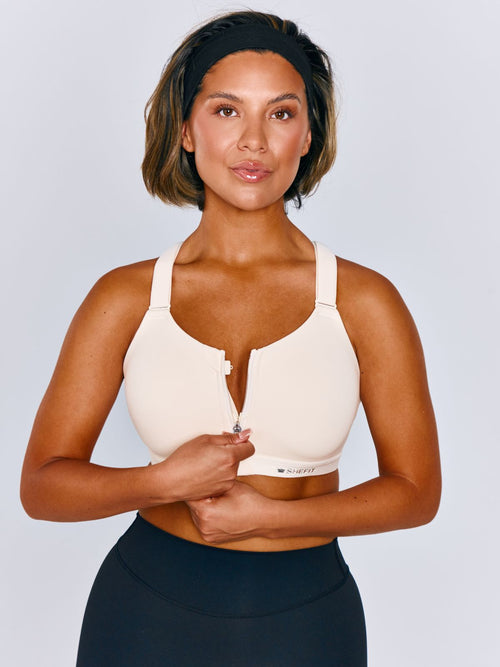
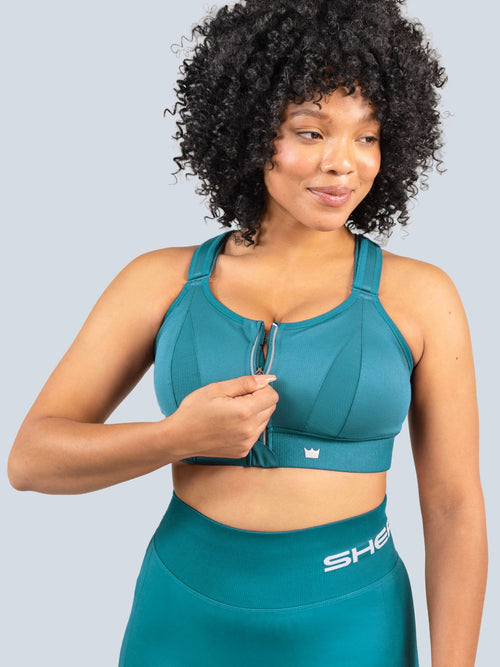
    The SHEFIT Ultimate Sports Bra brings patented adjustable technology to the plus-size market with options from XS-6Luxe and AA-I cups. The adjustable shoulder straps and rib band let you dial in a custom fit even when your body changes. The zipper front closure makes it easy to get on and off, while the encapsulation and compression design provides maximum support for high-impact activities. This bra includes removable modesty pads and uses breathable, moisture-wicking fabrics to reduce friction during intense workouts.

    What Sets the Ultimate Apart:

    Non-stretch strap construction → Traditional sports bras use elastic straps that gradually loosen over time, forcing constant readjustment or premature replacement. The Ultimate's non-stretch straps maintain your exact lift setting from start to finish.

    Research-backed support → University of Memphis research shows high-support sports bras like the SHEFIT Ultimate reduce breast motion by more than 50% during landing movements. The same research found greater breast support is associated with biomechanics linked to lower ACL injury risk [3].

    Adaptable across body changes → The adjustable design adapts when your bra size changes up or down, eliminating the need to replace your bra every time your body shifts through weight changes, hormonal fluctuations, or postpartum recovery.

    The SHEFIT Ultimate costs $74 and excels during high-impact activities like running and HIIT, plus horseback riding. Research confirms that proper breast support affects your entire kinetic chain during movement, making this bra valuable not just for comfort but for performance and safety. Studies show greater breast support reduces oxygen consumption and improves running economy by up to 7% [2], while inadequate support can alter landing mechanics and increase injury risk. Learn more about why proper support matters during any high-impact workout.

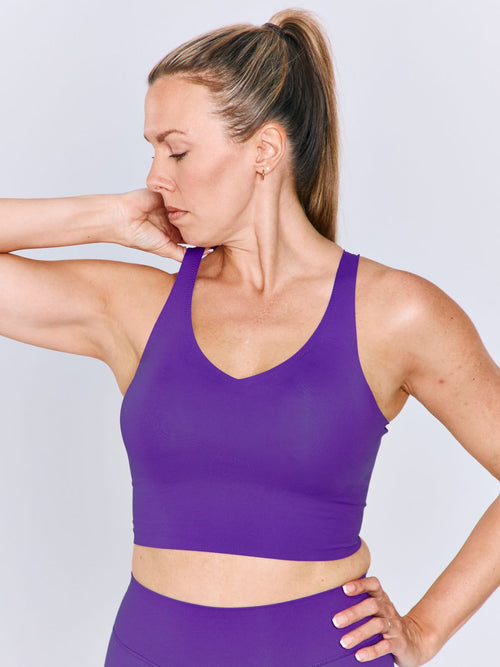
    The SHEFIT Flex Sports Bra offers the same patented adjustable features with smooth cups for a sculpted look.

    Flex Features:

    • Pullover style for easy on/off

    • High-impact support for smaller bust sizes (32C and under)

    • Medium-impact support for larger sizes

    • Adjustable straps and band for custom fit control

    • Encapsulation and compression design prevents tissue migration

    Choosing Between the Two SHEFIT Bras:

    Ultimate ($74) → Front zipper closure → High-impact all sizes → Best for: Running, HIIT, and horseback riding → Removable modesty pads

    Flex ($65) → Pullover style → High-impact (32C and under), medium-impact (larger) → Best for: Yoga and Pilates, plus cycling → Smooth cups for sculpted look

    The Flex shines during varied-intensity workouts where you're mixing cardio intervals with strength work or flowing between different movement patterns. At $65, it works beautifully for activities where you want reliable support without maximum restriction. The breathable fabric keeps you comfortable during longer sessions where moisture management becomes critical.

    Shared Features Across Both Models:

    ✓ Designed for all breast types (small to large, enhanced or natural)
    ✓ True size inclusivity: XS-6Luxe with AA-I cup options
    ✓ Wash-tested to 25 cycles (vs. 5 for most brands)
    ✓ Expected lifespan: 12-24+ months with proper care (vs. 6-12 months typical)

    Choosing by Activity Level

    Your breast size matters when selecting a bra for activity. Smaller bust sizes have more flexibility in choosing medium-support options for certain workouts, but high-intensity interval training still requires maximum support features. Larger bust sizes need maximum support features regardless of activity.

    Match your bra to your workout based on understanding what your body needs to move comfortably and safely through different types of movement.

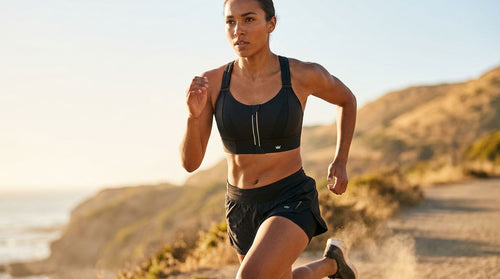
    For high-impact activities like running, jumping, or CrossFit workouts, look for maximum support with adjustable features. Your bra should eliminate bounce in all directions: vertical, side-to-side, and front-to-back. Research shows proper sports bras control breast movement in all three dimensions, not just up and down.

    High-impact activities create repetitive vertical displacement that puts stress on breast tissue and the ligaments that support it. Without adequate control, this repeated motion affects your comfort, your form, and potentially your willingness to continue the activity. Inadequate breast support can alter your landing mechanics and trunk positioning, which may influence injury risk patterns.

    Self-Assessment: Signs You Need High-Impact Support

    ☐ You run, do HIIT, ride horses, or perform plyometric exercises regularly
    ☐ Your workouts include jumping, burpees, or box jumps
    ☐ You experience significant bounce with current sports bras
    ☐ You adjust your bra 2+ times during intense workouts
    ☐ You've avoided certain exercises due to inadequate support
    ☐ Your bust size is 34C or larger
    ☐ You notice discomfort or pain during high-impact movement

    If you checked 3+ boxes, you need maximum support features with encapsulation and adjustable construction.

    Test your high-impact bra before committing to a full workout. Jump in place, do a few burpees, or run down the hallway. Your breasts should feel controlled and secure, not just "better than before." If you find yourself adjusting or holding your chest during these movements, you need more support.

    Choose high-support options that offer adjustability so one bra can handle both your morning run and afternoon errands without feeling restrictive during lower-intensity moments.

    For medium-impact activities like strength training, cycling, or Pilates, you need reliable support with room to breathe and move. The bra should stay secure during movement but not restrict your range of motion during overhead presses or deep stretches.

    Think about the specific movement patterns your activity requires. Cycling involves sustained forward-leaning posture that can create downward pull on your chest. Yoga includes inversions and twists that test how well your bra stays in place from multiple angles. Strength training adds explosive movements during certain lifts like thrusters or kettlebell swings that briefly create high-impact forces even in a "medium-impact" category.

    A quality medium-impact bra handles these varied demands while maintaining comfort during sessions that often run longer than quick cardio workouts. Breathable fabrics become more important when you're wearing the bra for 60-90 minutes versus a 30-minute HIIT session.

    If you're new to running, check out these running tips to build your routine safely while wearing proper support. Starting with the right foundation makes it easier to stay consistent with your training.

    Sizing and Fit Tips

    Getting the right fit starts with accurate measurements, but finding a sports bra that actually works for plus-size bodies requires more than just knowing your numbers.

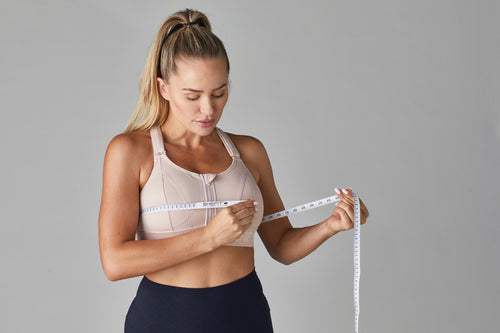
    Take accurate measurements of your band and bust size before ordering. Measure your band size directly under your bust with the tape parallel to the ground, pulling it snug but not tight. For your bust measurement, measure around the fullest part of your chest while wearing an unpadded bra or nothing at all. The difference between these measurements determines your cup size.

    Remember that cup sizes are relative to band sizes. A 38D has different cup volume than a 42D, even though both are labeled "D cup." This is why many plus-size women struggle with fit. They're sizing up in the band to accommodate cup volume, creating a loose band that rides up and fails to provide the anchor point that proper support requires.

    Look for brands that offer true cup size ranges rather than just S/M/L/XL sizing. SHEFIT's AA-I cup range combined with XS-6Luxe band sizes means you're matching your actual measurements instead of compromising on fit to accommodate limited size options.

    The Sports Bra Fit Journey:

    Before finding the right bra:
    Morning: Feels okay → Mid-workout: Straps slip, band rides up → 15 minutes in: Constant adjusting → 30 minutes: Ready to quit from discomfort

    After finding adjustable, properly fitted bra:
    Morning: Custom fit set in 30 seconds → Throughout workout: Zero adjustments needed → Post-workout: Still comfortable, no chafing

    Try the bra on and move before deciding it fits. Jump, reach overhead, twist your torso. The bra should stay in place without riding up your back or sliding down your chest. The straps should sit flat against your shoulders without digging in or slipping off.

    Check that coverage doesn't extend too far under your armpits. Excessive armpit coverage creates friction and restricts arm movement during exercises that require full shoulder mobility. The bra should support without digging into sensitive underarm tissue or limiting your range of motion.

    Look for signs of inadequate support before your next workout: if you're constantly adjusting, experiencing bounce, or noticing red marks from tight bands, your current bra isn't doing its job. These signals tell you something needs to change, whether that's adjusting your current bra's features or finding a different style altogether.

    Adjustability is your friend when your bra size changes up or down. Instead of buying a new bra every time your body shifts, choose adjustable options that move with you through weight changes, hormonal fluctuations, or postpartum recovery. This adaptability extends the practical life of your sports bra well beyond what fixed-size options can offer.

    Brands are finally paying attention to plus-size needs, but not every sports bra delivers on its promises. Don't settle for sports bras that treat extended sizes as an afterthought or simply scale up designs that weren't engineered for fuller busts in the first place.

    Frequently Asked Questions

    The difference between encapsulation and compression in sports bras

    Encapsulation gives each breast its own supportive space with individual cup coverage, while compression presses breasts against the chest wall to limit movement. Think of encapsulation like separate pockets that isolate each breast, preventing them from moving against each other. Compression works like a firm hug that minimizes overall tissue movement.

    The best plus-size sports bras use both encapsulation and compression together. Encapsulation prevents breast-to-breast friction and provides structure, while compression controls overall bounce. This combination delivers better support than either feature alone, especially for fuller busts that need control in multiple directions during movement.

    Signs your sports bra fits correctly

    The band should sit parallel to the ground without riding up during movement. This is your primary indicator of proper fit. If the band rides up your back during exercise, it's either too large or lacks adequate structure. Straps should stay in place on your shoulders without digging in or slipping off. You should be able to breathe comfortably while getting firm, secure support.

    Jump up and down a few times while wearing the bra. Your breasts should feel controlled with minimal movement. If you experience significant bounce or find yourself holding your chest instinctively, the support level isn't adequate for high-impact activities. Check for proper finding your right size to eliminate common fit issues that affect most women.

    Different sports bras for different workouts

    Your breast size and activity type determine what you need. High-impact activities always require maximum support with encapsulation, compression, and non-stretch construction. Medium-impact activities allow more flexibility, especially for smaller bust sizes.

    If you choose an adjustable sports bra, you can modify the support level for different workout intensities. This makes one quality adjustable bra more versatile than owning multiple fixed-support bras. Tighten everything down for running, loosen slightly for yoga. The same bra adapts to your activity without requiring a complete change.

    When to replace your sports bra

    Most sports bras last 6-12 months with regular use, but durability varies significantly by construction quality. Look for bras tested to 25 wash cycles or more. These typically last 12-24+ months with proper care. Replace your bra when you notice the band stretching out, straps losing elasticity, or decreased support during workouts. If you're constantly adjusting or experiencing more bounce than usual, your bra has likely lost its effectiveness even if it looks fine visually.

    Wearing plus-size sports bras for everyday activities

    Absolutely. Many women find that supportive sports bras work well for daily wear, especially adjustable options you can customize for all-day comfort. The key is choosing breathable, moisture-wicking fabrics that won't feel restrictive during normal activities. With adjustable bras, you can loosen the support slightly for everyday wear and tighten it back up when you hit the gym. This versatility makes one quality sports bra more valuable than owning separate bras for workout and casual use.

    SHEFIT compared to other adjustable sports bras

    SHEFIT uses non-stretch shoulder straps that maintain secure lift without loosening over time. The patented adjustable shoulder straps and rib band let you dial in a custom fit across a size range from AA-I cups. Research from the University of Memphis shows SHEFIT's high-support design reduced breast motion 33% more than low-support options and outperformed other leading brands' high-support bras by more than 50% [4].

    Finding Your Perfect Fit

    The right plus-size sports bra transforms your workout from a battle against discomfort into focused movement. When your bra provides genuine support without shifting, riding up, or digging in, you stop thinking about your chest and start thinking about your performance.

    That shift matters more than convenience. When you're not fighting your sports bra, you can focus on proper form, pushing harder, or simply enjoying the activity you chose. You show up more consistently because the experience doesn't involve constant adjustment and irritation. Your confidence grows because you're moving freely instead of wondering if you're securing adequate support.

    The market expansion in plus-size activewear reflects demand that existed all along. Brands ignored this demand for too long. This growth creates options, but it also creates noise. Not every sports bra marketed to plus-size women delivers the engineering and support it promises.

    Look for adjustable features that let you customize support to your body, not generic sizing that forces your body to adapt. Choose encapsulation and compression designs that control movement in all directions. Invest in quality construction tested for durability, not just aesthetics. Verify that the brand's "inclusive sizing" includes actual cup size ranges instead of just extended band sizes.

    Your workouts deserve support that actually works. When you find a sports bra that delivers that support, movement becomes what it should be: powerful and entirely yours.

    References

    [1] Wood, K., Cameron, M., & Fitzgerald, K. "Breast size, bra fit and thoracic pain in young women: a correlational study." Chiropractic & Osteopathy, 2008. https://pmc.ncbi.nlm.nih.gov/articles/PMC2275741/

    [2] Fong, H.B., & Powell, D.W. "Greater Breast Support Is Associated With Reduced Oxygen Consumption and Greater Running Economy During a Treadmill Running Task." Frontiers in Sports and Active Living, 2022. https://pubmed.ncbi.nlm.nih.gov/35774380/

    [3] Fong, H.B., Nelson, A.K., Storey, J.E., Hinton, J., Puppa, M., McGhee, D., Greenwood, D., & Powell, D.W. "Greater Breast Support Alters Trunk and Knee Joint Biomechanics Commonly Associated With Anterior Cruciate Ligament Injury." Frontiers in Sports and Active Living, May 20, 2022. https://doi.org/10.3389/fspor.2022.861553

    [4] Fong, H.B., Nelson, A.K., McGhee, D., Ford, K., & Powell, D.W. "Increasing breast support is associated with a distal-to-proximal redistribution of joint negative work during a double-limb landing task." Journal of Applied Biomechanics, 2022. https://www.memphis.edu/healthsciences/pdfs/jab-biomech-2023.pdf