2X REWARDS POINTS · OCT. 6–7 ONLY Sign In

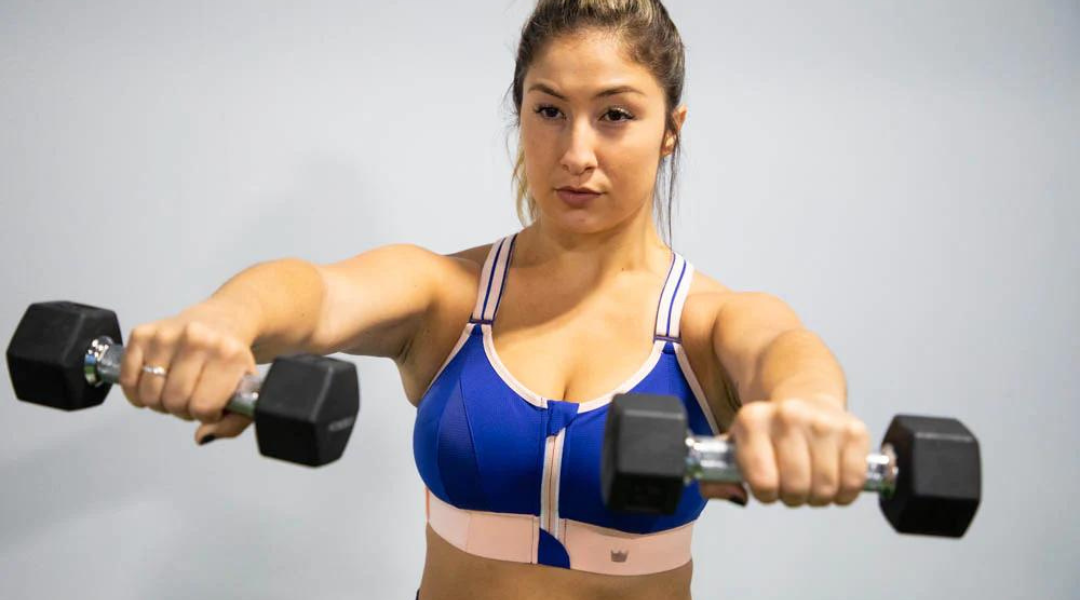
You can train your arms and shoulders at home with a pair of dumbbells. This guide includes triceps kickbacks, lateral raises, biceps curls, shoulder presses, and front raises, with steps to help you control each movement.
The exercises work different areas of your upper body. Curls focus on the front of your upper arms, kickbacks on the back of your upper arms, and raises and presses on your shoulders. Choose weights for each movement rather than using the same load for everything.
How to Use These Five Exercises
Start with a light practice set to learn each movement. For weighted sets, about 12–15 controlled repetitions is a practical starting point; one set can be enough to begin. Add work gradually as you become comfortable, and leave at least one full day before training the same muscles again. Stop if an exercise causes pain.
You do not need to complete every exercise each session. Keep the movements smooth, avoid swinging, and breathe throughout. If the last repetitions require you to change your position, use less weight or end the set.
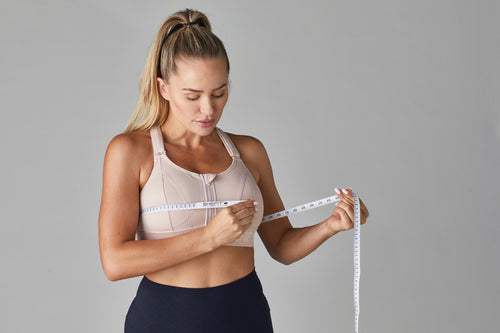
Before you start, check that your sports bra stays comfortable when you reach and bend. The SHEFIT Fit Guide can help you check fit, and the Bra Comparison explains the available support options.
Five Dumbbell Exercises to Try
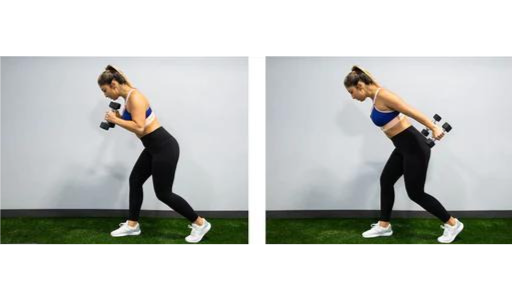
1. Triceps Kickback
This exercise targets your triceps, the muscles at the back of your upper arms.
- Hold a dumbbell in each hand. Bend your knees slightly and hinge forward with a steady back.
- Bend your elbows and keep your upper arms beside your torso.
- Straighten your elbows slowly, keeping your upper arms still. Do not throw the weights backward or lift your arms toward the ceiling.
- Bend your elbows to lower the weights with control, then repeat.
If you're looking for dumbbell arm exercises that focus entirely on stronger triceps and biceps, you'll want to give this 6-move workout a go.
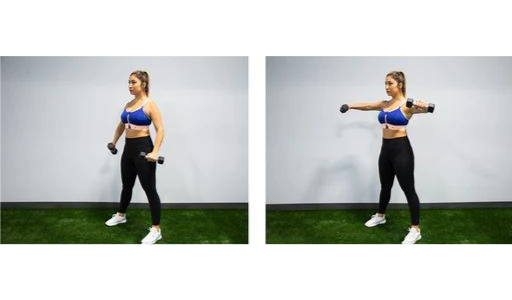
2. Lateral Raise
Your shoulders are the lynchpins to your arms, not to mention one of the most noticeable muscle groups in your upper body.
Use a light weight and keep a small bend in your elbows. Raise and lower with control, without shrugging or swinging.
- Step 1: Start with your feet shoulder-width apart, and holding your dumbbells at your sides with your palms facing inward. Be sure to keep your feet flat throughout the entire move.
- Step 2: Raise the weights out to your sides to a comfortable height, no higher than your shoulders. Keep the slight bend in your elbows.
- Step 3: Pause.
- Step 4: Slowly lower the weights down and focus on maintaining control of the weights, until you reach the start position.
- Step 5: Repeat.
Muscles Targeted:
Lateral raises focus on the side of your shoulders.
If you want to try other shoulder dumbbell arm exercises, check out these 5 moves for toned shoulders.
3. Biceps Curl
Biceps curls work the front of your upper arms.
- Stand or sit with a dumbbell in each hand, arms beside you and palms facing forward.
- Keep your elbows near your sides and wrists straight as you bend your elbows to raise the weights.
- Lower slowly without swinging your arms or leaning backward.
- Repeat, or alternate arms while keeping the rest of your body steady.

4. Shoulder Press
The shoulder press works your shoulders and triceps.
- Stand with your feet comfortably apart and hold the dumbbells near shoulder height, with your elbows beneath your wrists.
- Brace your trunk and press the weights overhead in a controlled movement.
- Avoid leaning backward to lift the weights. Use a lighter load if you cannot keep your torso steady.
- Lower to the starting position with control and repeat.

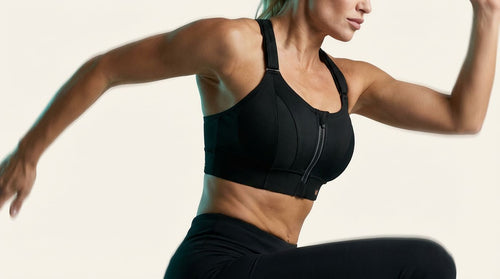
The photo shows a front raise with both arms. Follow the steps below to alternate one arm at a time.
5. Alternating Front Raise
Front raises focus on the front of your shoulders. This area also works during shoulder presses, so you can choose one of these exercises when you want a shorter session.
- Stand with a dumbbell in each hand and your arms by your sides.
- Keep a slight bend in your elbow and lift one weight in front of you to a comfortable height, no higher than your shoulder.
- Lower slowly without leaning or swinging.
- Repeat with the other arm.
Keep Your Routine Manageable
Warm up with easy movement, then practice with lighter weights. During your sets, control both the lift and the lowering phase. Keep breathing, and stop when you can no longer maintain your technique.
Choose a load that challenges you without forcing you to swing or change position. When it becomes easy, increase resistance gradually. Give the muscles you trained time to recover before your next session.
These exercises are one part of a balanced strength routine. Include other muscle groups across the week; these back exercises at home offer pulling movements and bodyweight options to explore.